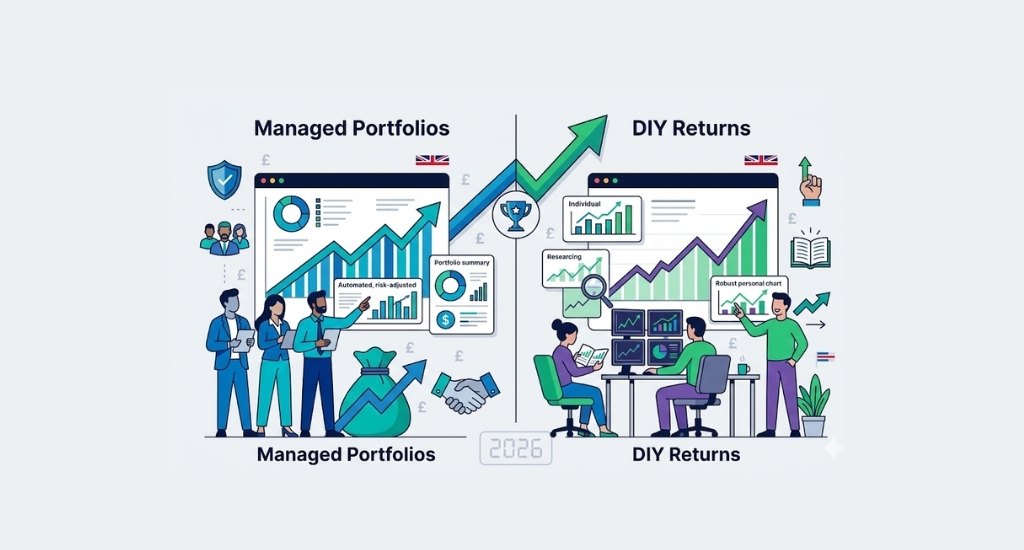
The best performing managed stocks and shares ISA over five years has been Moneyfarm, with returns of around 84% on its highest-risk portfolio. However, a simple DIY approach using a Vanguard S&P 500 ETF would have returned over 96% in the same period. The right choice depends on whether you want a fully managed service or are happy picking your own funds. Managed ISAs suit hands-off investors, while DIY platforms offer higher potential returns at lower cost for those willing to do the research.
Choosing the best stocks and shares ISA is not just about finding the lowest fees. Performance matters, and the gap between the best and worst performing ISA portfolios can be significant over five years or more.
In this guide, we compare the performance of the leading managed stocks and shares ISA providers, explain why DIY investors have typically outperformed them, and help you decide which approach suits your investment goals. If you are new to this type of account, our best stocks and shares ISA guide covers the fundamentals, including fees and features.
Types of Stocks and Shares ISA: Managed vs DIY
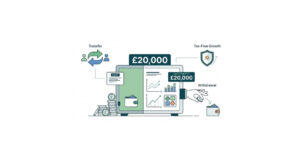
Before comparing performance, it helps to understand the two main approaches to investing through a stocks and shares ISA. Both use the same £20,000 annual ISA allowance and offer the same tax benefits, but the investment experience and potential returns differ considerably.
Fully managed (robo-adviser) ISAs
With a managed ISA, you answer questions about your risk tolerance and investment goals, and the provider builds and manages a diversified portfolio on your behalf. Providers such as Moneyfarm, J.P. Morgan Personal Investing (formerly Nutmeg), and Wealthify fall into this category. The main advantage is simplicity. You do not need to choose individual funds or rebalance your portfolio. The trade-off is that you pay higher fees and have less control over where your money is invested.
DIY (self-select) ISAs
With a DIY ISA, you choose your own investments from a wide range of funds, ETFs, investment trusts and individual shares. Platforms such as InvestEngine, Trading 212, Hargreaves Lansdown and AJ Bell offer this type of ISA. DIY investors who select low-cost global index funds have historically outperformed most managed portfolios, but you need to be comfortable making your own investment decisions.
Part-managed options
Some providers offer a middle ground. Vanguard's LifeStrategy funds, for example, are ready-made multi-asset portfolios that you select yourself but which are automatically rebalanced. This gives you a managed feel at a much lower cost. Our Vanguard review explains the full range.
Best Performing Managed Stocks and Shares ISAs (Five-Year Returns)
The table below compares the five-year performance of the leading fully managed ISA providers. We have used each provider's highest-risk portfolio to give the fairest like-for-like comparison, as these have the greatest equity exposure and therefore the highest potential returns. All figures are after fees.
| Provider | Portfolio | 5-year return | Annual fee | Min. invest | Portfolios |
| Moneyfarm | Level 7 (highest risk) | ~84% | 0.60% | £500 | 7 |
| J.P. Morgan PI | Level 10 (highest risk) | ~79% | 0.75% | £500 | 10 |
| Wealthify | Adventurous | ~68% | 0.60% | £1,000 | 5 |
| Vanguard (managed) | LifeStrategy 100% | ~72% | 0.15% + 0.22% | £500 | 5 |
Source: Money to the Masses, Good Money Guide, provider websites. Returns based on five calendar years (2020-2025), highest-risk portfolios, after provider fees but before underlying fund charges where separately levied. Figures are approximate and will vary depending on exact measurement dates.
There are several important observations from this data. Moneyfarm's highest-risk portfolio has been the strongest performer among the fully managed options, returning approximately 84% over five years. However, its mid-risk portfolios (levels 4 and 5) have also performed well relative to competitors, suggesting good risk-adjusted returns overall.
J.P. Morgan Personal Investing (the rebranded Nutmeg) has slightly outperformed Moneyfarm on lower and mid-risk portfolios, but trails on the highest-risk option. Wealthify, backed by Aviva, has generally delivered the weakest returns across all risk levels over this period. Vanguard's LifeStrategy 100% Equity fund is not technically a managed service (you select it yourself), but it provides a useful benchmark for what a simple, globally diversified equity portfolio can achieve at very low cost.
Why DIY Investors Have Outperformed Managed ISAs
One of the most striking findings when comparing ISA performance is that a straightforward DIY approach has consistently beaten the managed providers over the same period.
The power of low-cost index funds
The Vanguard S&P 500 ETF (VUAG), one of the most popular ETFs among UK investors, returned approximately 96% over the five years to mid-2025. That is more than 12 percentage points ahead of the best managed ISA portfolio. This outperformance is largely down to two factors: lower fees (ETF ongoing charges of around 0.07% compared to 0.60% or more for managed services) and concentrated equity exposure (100% equities versus the mixed asset allocation in managed portfolios).
Most popular DIY ISA investments
Data from InvestEngine shows the most popular ETFs among stocks and shares ISA investors in 2025 and early 2026 were the Vanguard S&P 500 (VUAG), the Invesco FTSE All-World ETF (FWRG), and the Vanguard FTSE All-World ETF (VWRP). All three provide broad, diversified equity exposure at very low cost. Our best index funds UK guide covers these and other popular options in detail.
Why managed ISAs still hold less equity
Managed ISA providers allocate a portion of their portfolios to bonds, cash and alternative assets, even in their highest-risk options. This is by design. They are building portfolios intended to reduce volatility and protect against large drawdowns. In years like 2022, when both equities and bonds fell sharply, this diversification did not help as much as expected. But in a prolonged market downturn, a blended portfolio should theoretically fall less than a 100% equity portfolio.
Managed ISA Provider Profiles
Moneyfarm
Moneyfarm is a digital wealth manager offering seven risk-rated portfolios built primarily from ETFs. It provides regulated investment advice, meaning it recommends a portfolio based on your circumstances rather than simply letting you pick one. The platform also offers share investing, a cash ISA and a pension (SIPP). Fees start at 0.60% for portfolios under £10,000 and reduce as your balance grows. A key differentiator is access to human investment consultants at no extra charge. Our Moneyfarm review provides a full breakdown.
J.P. Morgan Personal Investing (formerly Nutmeg)
Acquired by J.P. Morgan in 2021, Nutmeg was the UK's first robo-adviser. It offers 10 risk-rated fully managed portfolios, fixed allocation options and actively managed Smart Alpha portfolios. It also has a Lifetime ISA, which Moneyfarm does not. Fees are 0.75% up to £100,000 and 0.35% above that. The rebrand brought additional resources and credibility, though the investment team and approach remain largely the same. See our Nutmeg review for details.
Wealthify
Wealthify is majority-owned by Aviva and offers five risk-rated portfolios ranging from Cautious to Adventurous. It charges a flat 0.60% management fee regardless of portfolio size, making it straightforward but not the cheapest for larger balances. Performance has lagged behind both Moneyfarm and J.P. Morgan Personal Investing over the past five years, particularly on higher-risk portfolios. The minimum ISA investment is £1,000.
Vanguard Investor
Vanguard is a DIY platform rather than a managed service, but its LifeStrategy range and Target Retirement funds act as ready-made portfolios for hands-off investors. The platform charges just 0.15% (capped at £375 per year), and underlying fund charges average around 0.22%. For investors with larger portfolios, this makes Vanguard significantly cheaper than any of the managed providers. Our guide to the best investment platforms UK compares Vanguard against the leading alternatives.
How to Choose the Best Performing ISA for You
Selecting the right stocks and shares ISA is not simply a matter of picking the provider with the best past returns. Several other factors matter.
Consider your risk tolerance
The managed portfolios with the highest returns are those with the greatest equity exposure. If a 20-30% portfolio drop in a bad year would cause you to panic and sell, a lower-risk portfolio may deliver better real-world results for you, even if the headline returns are lower. Our guide on whether investing is worth it discusses how to think about risk.
Factor in total costs
Fees compound over time and can significantly erode returns. A 0.60% annual fee on a £20,000 ISA costs £120 per year. Over 20 years, assuming 7% average growth, that fee difference compared to a 0.15% platform costs you several thousand pounds. Our cheapest trading platforms UK comparison highlights the most cost-effective options.
| Fee level | Annual cost on £20k | Cost over 10 years* | Cost over 20 years* |
| 0.15% (e.g. Vanguard) | £30 | ~£420 | ~£1,200 |
| 0.60% (e.g. Wealthify) | £120 | ~£1,700 | ~£5,000 |
| 0.75% (e.g. J.P. Morgan PI) | £150 | ~£2,200 | ~£6,500 |
*Approximate figures assuming 7% annual growth and no additional contributions, showing cumulative fees paid. Underlying fund charges are additional.
Think about your involvement level
If you want to invest and forget about it, a managed ISA from Moneyfarm or J.P. Morgan Personal Investing is a sensible choice. You will pay more in fees, but the convenience and behavioural guardrails (preventing you from making emotional decisions) have real value. If you are comfortable choosing a global index fund and leaving it to grow, a DIY platform will almost certainly be cheaper and may well deliver better returns.
Look at the full track record, not just one year
A provider that performed well in 2025 may have struggled in 2022. When evaluating performance, look at returns across multiple years, including the difficult periods. The 2022 downturn (when both equities and bonds fell) is a particularly useful stress test for managed portfolios. Only Moneyfarm's level 6 portfolio and Wealthify's Adventurous portfolio had fully recovered their 2022 losses by the end of 2023.
What to Invest In: Popular Funds for Stocks and Shares ISAs
For DIY investors, the most popular choices in 2025 and early 2026 have been broad, low-cost index-tracking ETFs. Here are some of the most widely held funds among UK ISA investors.
Vanguard S&P 500 UCITS ETF (VUAG)
This ETF tracks the 500 largest US companies and has been the single most popular investment among ISA holders on multiple platforms. It provides exposure to companies like Apple, Microsoft, Amazon and Nvidia at an ongoing charge of just 0.07%. Over five years, it has returned approximately 96%. For more on US market investing, see our guide to the best S&P 500 index funds.
Vanguard FTSE All-World UCITS ETF (VWRP)
For investors who want global diversification beyond just the US, this ETF tracks over 3,700 companies across developed and emerging markets. It has an ongoing charge of 0.22% and provides a single-fund solution for global equity exposure. Our guide to the best ETFs UK covers this and similar options.
Invesco FTSE All-World UCITS ETF (FWRG)
A newer alternative to the Vanguard All-World ETF, this Invesco option tracks the same global index but at a lower ongoing charge of 0.15%. It has quickly become one of the most popular ETFs on platforms like InvestEngine.
Vanguard LifeStrategy funds
These ready-made funds come in five variants based on equity allocation (20%, 40%, 60%, 80% or 100%). The LifeStrategy 100% Equity Fund is popular among younger investors with a long time horizon, while the 60% or 80% options suit those wanting some bond exposure to reduce volatility. Ongoing charges are around 0.22%.
Most bought individual shares in ISAs
For those who prefer individual stocks, data from interactive investor shows the most bought shares in ISAs during 2025 included Rolls-Royce, Aviva, Legal & General, Taylor Wimpey and Glencore. For income seekers, our best dividend stocks UK guide covers the top yielding options.
Key Rules for Stocks and Shares ISAs in 2025/26
Before choosing a provider, make sure you understand the current ISA rules.
Annual allowance
The total ISA allowance for 2025/26 is £20,000. This can be split across multiple ISAs, including stocks and shares ISAs and cash ISAs. From April 2027, the cash ISA allowance will be capped at £12,000 for those under 65, though the overall £20,000 limit remains unchanged. This change is expected to encourage more people toward stocks and shares ISAs.
Multiple ISAs
Since April 2024, you can open and contribute to multiple stocks and shares ISAs in the same tax year, as long as your total contributions do not exceed the £20,000 annual limit. This means you could have a managed ISA with Moneyfarm and a DIY ISA with InvestEngine simultaneously.
Tax benefits
All returns within a stocks and shares ISA, including capital gains, dividends and interest, are completely tax-free. There is no capital gains tax on profits and no dividend tax on income. Given that the CGT annual allowance has fallen to just £3,000 and the dividend allowance to £500, the ISA wrapper is more valuable than ever.
FSCS protection
Investments held through FCA-regulated platforms are protected by the Financial Services Compensation Scheme (FSCS) up to £85,000 per provider if the firm fails. This protects you against the platform going bust, not against investment losses from market movements. All providers listed in this article are FCA-regulated and FSCS-covered.
Transferring between providers
You can transfer existing ISAs between providers without losing your tax-free status or using up your annual allowance. This is useful if you want to move from an underperforming managed ISA to a DIY platform, or vice versa. Most providers handle the transfer process for you. See our how to transfer an ISA guide for step-by-step instructions.
Frequently Asked Questions
Which stocks and shares ISA has the best returns?
Among fully managed providers, Moneyfarm has delivered the strongest five-year returns on its highest-risk portfolio, at approximately 84%. However, DIY investors who selected a simple S&P 500 index fund have achieved returns of around 96% over the same period. Past performance does not guarantee future results.
Is a managed ISA better than a DIY ISA?
It depends on your preferences and experience. A managed ISA is better if you want a hands-off approach and are willing to pay higher fees for convenience and professional management. A DIY ISA is better if you are comfortable selecting your own investments and want to keep costs low. Many investors start with a managed ISA and move to DIY once they feel more confident.
How much should I invest in a stocks and shares ISA?
That depends on your financial situation and goals. The maximum you can contribute in 2025/26 is £20,000. Experts recommend investing for at least five years to give your portfolio time to ride out short-term market fluctuations. Even small regular amounts, such as £50 or £100 per month, can grow significantly over time. Our guide on how to start investing covers getting started with any budget.
Are stocks and shares ISA returns guaranteed?
No. Unlike a cash ISA, where your capital is protected, the value of investments in a stocks and shares ISA can fall as well as rise. You may get back less than you put in. However, historically, stock market investments held for five years or more have delivered positive returns in the vast majority of cases.
Can I lose money in a stocks and shares ISA?
Yes. If the value of your investments falls, your ISA balance will decrease. This is the trade-off for the potential of higher long-term returns compared to cash. The risk can be reduced by diversifying across different asset classes, regions and sectors, and by investing for the long term.
Should I choose a stocks and shares ISA or a cash ISA?
For short-term savings (under five years), a cash ISA is generally more appropriate as your capital is protected. For long-term goals (five years or more), a stocks and shares ISA has historically delivered better returns, even accounting for periodic market downturns. You can hold both types simultaneously. Our cash ISA vs stocks and shares ISA comparison explains the key differences.
What happens to my ISA when I die?
Your stocks and shares ISA can be passed to your spouse or civil partner through an Additional Permitted Subscription (APS), which allows them to inherit your ISA tax benefits. For other beneficiaries, the ISA wrapper is lost and the investments become part of your estate, potentially subject to inheritance tax.
Related Reading
• Best Stocks and Shares ISA 2026
• Cash ISA vs Stocks and Shares ISA
• Capital Gains Tax on Shares UK
Editorial disclosure: Smart Investor UK is an independent financial education platform. Performance data in this article has been compiled from Money to the Masses, Good Money Guide, InvestEngine, interactive investor and provider websites as of early 2026. Returns are approximate and based on publicly available data. We do not provide personalised financial advice. If you are unsure which ISA is right for you, consider speaking to a regulated financial adviser.