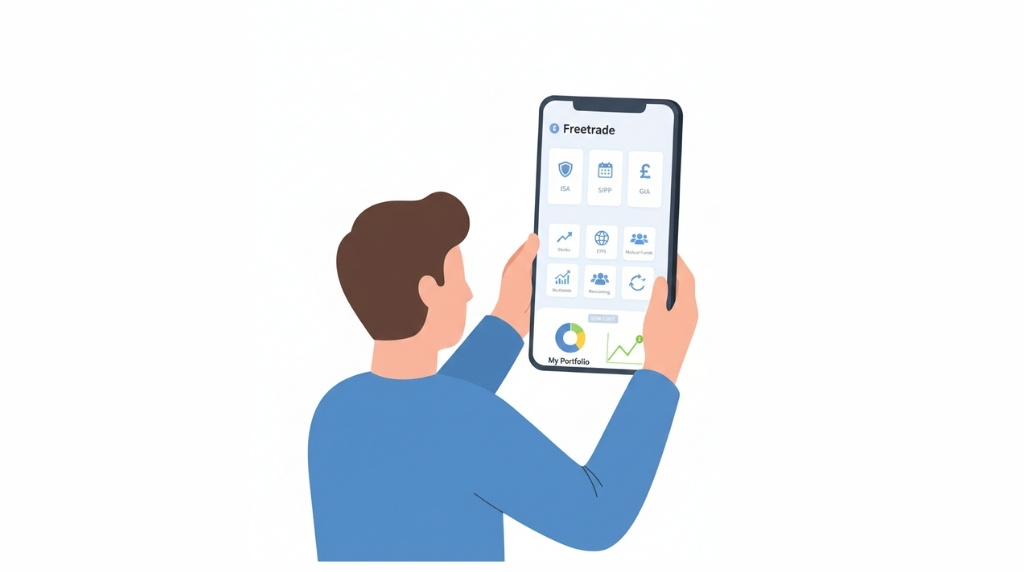
Freetrade is a commission-free UK investment app offering a free Stocks and Shares ISA, free SIPP, and access to over 7,000 stocks, funds, ETFs, trusts, bonds, UK Treasury bills, and more. Since January 2026, the Basic plan includes ISA, SIPP, and mutual fund access at zero cost. FX fees of 0.99% on overseas trades are the main cost to watch. Owned by IG Group since 1 April 2025, Freetrade is FCA-regulated. Eligible cash deposits may be protected by the FSCS up to £120,000, while investments may be protected up to £85,000. Best for cost-conscious beginners who want a simple, mobile-first investing experience with tax-efficient accounts included for free.
Freetrade at a Glance
| Feature | Details |
| Founded | 2016 (London, UK) |
| Registered Users | 1.5 million+ |
| Parent Company | IG Group (acquired 1 April 2025) |
| Regulation | FCA (UK) |
| FSCS Protection | Eligible cash deposits up to 120,000 pounds; investments up to 85,000 pounds |
| Account Types | ISA, SIPP, GIA |
| Commission | Zero (all plans) |
| Platform Fee (Basic) | Zero |
| FX Fee (Basic) | 0.99% |
| Investments Available | 7,000+ stocks, funds, ETFs, trusts, bonds, UK Treasury bills, and more |
| Fractional Shares | Yes (US stocks) |
| Minimum Investment | None |
(Source: Freetrade website, FCA register, February 2026.)
What Is Freetrade?
Freetrade is a UK-based investment app that launched in 2018 with the aim of making stock trading accessible and affordable. It allows users to buy and sell UK, US, and European stocks, ETFs, investment trusts, mutual funds, and UK government bonds with zero commission. The app has attracted over 1.5 million registered users and was acquired by IG Group on 1 April 2025 for £160 million.
Freetrade operates on a freemium model with three subscription tiers. The free Basic plan now includes a Stocks and Shares ISA, SIPP, and access to the full investment range including mutual funds, making it one of the most generous free offerings among UK platforms.
Freetrade Fees
Subscription Plans
| Feature | Basic (Free) | Standard (5.99/mo) | Plus (11.99/mo) |
| ISA | Included | Included | Included |
| SIPP | Included | Included | Included |
| GIA | Included | Included | Included |
| Commission | Zero | Zero | Zero |
| FX Fee | 0.99% | 0.59% | 0.39% |
| Cash Interest | 1.00% (up to 1,000) | 3.00% (up to 2,000) | 3.50% (up to 3,000) |
| Mutual Funds | Yes | Yes | Yes |
| Priority Support | No | No | Yes |
(Source: Freetrade website, February 2026. Fees may change.)
The main cost on Freetrade is the FX conversion fee, which applies whenever you buy or sell stocks denominated in a foreign currency (primarily US and European stocks). At 0.99% on the Basic plan, this is higher than Trading 212 (0.15%) and AJ Bell (0.75%) but can be reduced to 0.39% by upgrading to the Plus plan. For investors who primarily buy UK-listed stocks or ETFs, the FX fee is not relevant.
Stamp Duty
UK stamp duty of 0.50% applies to purchases of UK-listed shares and is collected automatically. This is a government tax, not a Freetrade fee, and applies equally on all platforms. It does not apply to ETFs, investment trusts, or AIM shares. See our guide on stamp duty on shares for more detail.
How Freetrade Compares on Fees
| Platform | Commission | Platform Fee | ISA Fee | FX Fee | SIPP Fee |
| Freetrade | Zero | Zero | Zero | 0.99% | Zero |
| Trading 212 | Zero | Zero | Zero | 0.15% | No SIPP |
| InvestEngine | Zero | Zero | Zero | N/A | Zero |
| AJ Bell | 1.50-5.00 | 0.25% | Included | 0.75% | Included |
| Hargreaves L. | 6.95 | 0.35% | Included | 1.00% | Included |
| Int. Investor | 3.99 | 5.99/mo | Included | 0.99% | Included |
(Source: Platform websites, February 2026. See our best trading platforms UK guide for detailed comparisons.)
What Can You Invest in on Freetrade?
Freetrade provides access to over 6,500 instruments across UK, US, and European markets. This includes individual shares listed on the London Stock Exchange, NYSE, NASDAQ, and European exchanges. The platform also offers a range of ETFs from providers including Vanguard and iShares, investment trusts, and since 2025, over 300 mutual funds and UK government bonds (gilts and Treasury bills).
Freetrade supports fractional shares for US-listed stocks, allowing you to invest any amount from a few pounds rather than buying whole shares. This is particularly useful for expensive US stocks like Amazon and Nvidia. Fractional shares are not available for UK-listed stocks.
Freetrade does not offer bonds (other than gilts), forex trading, CFDs, spread betting, or cryptocurrency directly (though crypto ETNs are available through the GIA).
Freetrade Account Types
Stocks and Shares ISA
The Freetrade ISA is now free on all plans and is a flexible ISA, meaning you can withdraw and replace money within the same tax year without affecting your ISA allowance. All gains, dividends, and interest are tax-free up to the 20,000 pound annual allowance. For more on ISA options, see our best stocks and shares ISA guide.
SIPP
The Freetrade SIPP is also free on all plans from January 2026. This makes it one of the cheapest SIPPs available in the UK, particularly for larger pension pots where percentage-based providers like Vanguard and AJ Bell charge more. The flat-fee structure (or in this case, zero fee) favours investors with larger balances. For a SIPP comparison, see our guide to the best SIPPs.
General Investment Account (GIA)
The GIA is included on all plans and is suitable for investing above the ISA allowance. Returns in the GIA are subject to capital gains tax and dividend tax.
Freetrade App and Platform
Freetrade is primarily a mobile-first platform, with its app available on iOS and Android. The app is clean, intuitive, and well-designed for beginners. Key features include simple search and stock discovery, one-tap buying and selling, portfolio overview with performance tracking, recurring orders and direct debits for automated investing, limit orders and stop-loss orders, and a web platform that mirrors the mobile experience.
The main limitation is the lack of advanced charting and research tools compared to platforms like Hargreaves Lansdown or Interactive Investor. Freetrade provides basic company information and price charts but does not offer in-depth analyst research, financial statements, or portfolio analysis tools. For investors who want to research before they buy, external resources or a platform with stronger research capabilities may be needed.
Freetrade Pros and Cons
Pros
Zero commission on all trades across all plans. Free Stocks and Shares ISA and free SIPP included on the Basic plan. Flexible ISA (withdraw and replace without losing allowance). Fractional shares for US stocks. Clean, beginner-friendly mobile app. Over 6,500 instruments including mutual funds and gilts. Recurring orders and limit orders available on all plans. Owned by IG Group, a well-established financial services company. FCA-regulated and FSCS-protected up to 120,000 pounds.
Cons
FX fee of 0.99% on overseas trades (Basic plan) is higher than Trading 212 (0.15%). Limited research and analysis tools compared to full-service platforms. No Lifetime ISA. No cash ISA. No fractional shares for UK stocks. Cash interest rates are low on the Basic plan (1.00% on up to 1,000 pounds). No telephone customer support. Past concerns about fractional US shares and ISA eligibility (since addressed by the platform).
Who Is Freetrade Best For?
Freetrade is best suited for beginners and cost-conscious investors who want a simple, commission-free way to invest in shares and ETFs. The free ISA and SIPP make it particularly attractive for long-term investors building a portfolio across tax-efficient accounts. It is also strong for investors who primarily buy UK-listed shares and ETFs (where FX fees do not apply) and those who want an ISA, SIPP, and GIA on a single platform at zero cost.
Freetrade is less suitable for active traders who buy US stocks frequently (due to the 0.99% FX fee), investors who want in-depth research tools, and those who need access to bonds, forex, or complex instruments. For US stock trading at a lower FX cost, Trading 212 (0.15%) is significantly cheaper. For a direct comparison, see our guide on Trading 212 vs Freetrade.
Frequently Asked Questions
Yes. Freetrade is authorised and regulated by the Financial Conduct Authority (FCA) and client funds are protected by the FSCS up to 120,000 pounds per person. Client money is held in segregated bank accounts, separate from Freetrade's own funds. The platform is owned by IG Group, a FTSE 250 company.
The Basic plan is genuinely free, with zero commission, zero platform fees, and a free ISA and SIPP. The main cost is the 0.99% FX fee on overseas share trades. UK share trades and UK-listed ETF trades have no FX fee, making them truly free (excluding stamp duty on UK shares).
Freetrade earns revenue from FX fees on non-GBP trades, interest earned on uninvested client cash, and subscription fees from Standard and Plus plan members. It does not earn from trading commissions or payment for order flow.
It depends on your priorities. Freetrade offers a free SIPP and mutual fund access, which Trading 212 does not. Trading 212 charges a much lower FX fee (0.15% vs 0.99%) and offers fractional shares on UK stocks. For a detailed comparison, see Trading 212 vs Freetrade.
Yes. Freetrade supports ISA transfers from other providers. The transfer process is initiated within the app and typically takes two to six weeks depending on the outgoing provider.
No. Freetrade does not currently offer a Lifetime ISA. For LISA options, see our Lifetime ISA rules guide.
The FX fee is 0.99% on the Basic plan, 0.59% on Standard, and 0.39% on Plus. This fee applies when buying or selling stocks denominated in a foreign currency (such as US dollars or euros). It does not apply to UK-listed investments.
Yes. The Basic plan pays 1.00% on up to 1,000 pounds of uninvested cash. Standard pays 3.00% on up to 2,000 pounds, and Plus pays 3.50% on up to 3,000 pounds. These rates are variable and may change.
Yes. Freetrade offers Vanguard ETFs (such as VWRL and VUAG) and, since January 2026, a range of Vanguard mutual funds. However, the selection is not as comprehensive as buying directly through the Vanguard platform.
Yes, for US-listed stocks. You can invest any amount from a few pounds in companies like Apple, Tesla, and Nvidia. Fractional shares are not currently available for UK-listed stocks on Freetrade.
Related Reading
Capital at risk. The value of your investments can go down as well as up. You may get back less than you invest. Tax treatment depends on your individual circumstances and may change in the future. ISA rules and allowances may also change. If you are unsure whether investing is right for you, seek independent financial advice.