To buy shares in the UK, open a Stocks and Shares ISA with a platform like Trading 212, InvestEngine, or Hargreaves Lansdown, deposit funds, search for the company or ETF you want, and place a buy order. You can start from as little as £1 with fractional shares. UK share purchases attract 0.5% stamp duty (SDRT), which your platform deducts automatically. Around 14 million UK adults now own shares, up 44% since 2023.
What Are Shares and How Do They Work?
A share represents a small unit of ownership in a company. When you buy shares in a publicly listed company, you become a part owner of that business and may benefit in two ways: through the share price rising (capital growth) and through dividend payments, where the company distributes a portion of its profits to shareholders.
The London Stock Exchange (LSE) is the UK’s primary stock exchange. It lists approximately 3,100 companies across its Main Market and the Alternative Investment Market (AIM), which is home to smaller, growing businesses. Shares are traded during market hours, which run from 8:00 AM to 4:30 PM GMT on weekdays, excluding UK bank holidays.
When you buy shares through a platform, you don’t usually hold a physical share certificate. Instead, your shares are held electronically in a nominee account managed by your broker. This is the standard way retail investors hold shares in the UK, and your ownership is fully protected under FCA regulations.
According to Finder’s 2025 UK investing survey, approximately 26% of UK adults now own stocks and shares, equating to around 14 million people. That figure is up 44% from 2023, when just 18% of Brits held shares, reflecting the growing accessibility of modern investment platforms.

What Do You Need Before You Buy Shares?
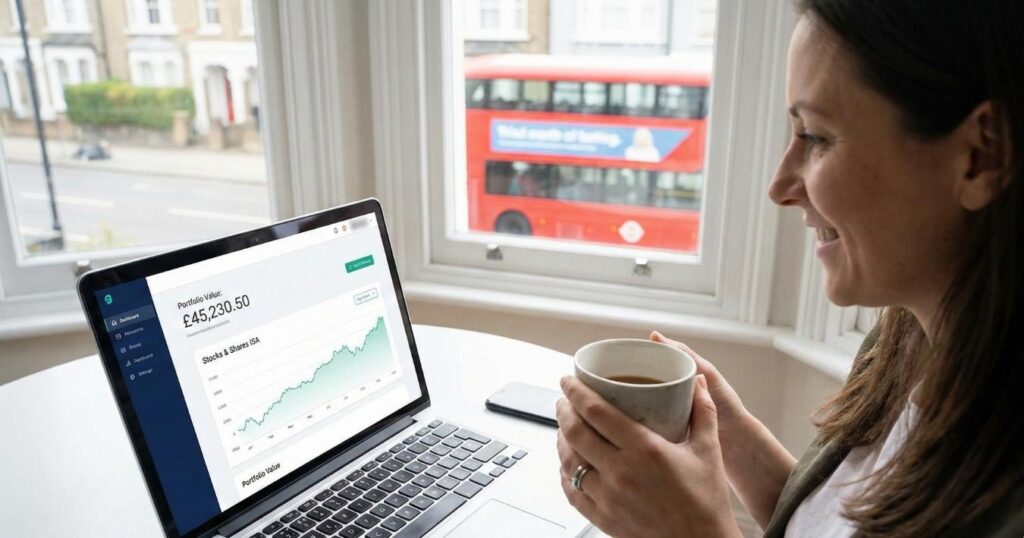
Before purchasing your first shares, you should have the following in place. First, ensure you have an emergency fund covering three to six months of living expenses held in an easy-access savings account. Second, pay off any high-interest debt such as credit cards or personal loans. Third, accept that money invested in shares should not be needed for at least five years, as short-term market fluctuations can temporarily reduce your investment’s value.
You will also need to choose an investment account. For most people, a Stocks and Shares ISA is the best option because all capital gains and dividends within the ISA are completely tax-free. The for 2025/26 is £20,000 per tax year.
If you plan to invest more than £20,000 per year, you will need a General Investment Account (GIA) for the excess. Be aware that the , down from £12,300 in 2022/23 according to HMRC, so the ISA wrapper is more valuable than ever.
- Build an emergency fund covering three to six months of expenses before investing in shares.
- A Stocks and Shares ISA shelters up to £20,000 per year from capital gains tax and dividend tax.
- The CGT annual exempt amount is now £3,000, making ISA protection increasingly important.
- Only invest money you can afford to leave untouched for at least five years.
How to Choose a Share Dealing Platform
The platform you choose will affect your costs, the range of shares available, and your overall experience. Here is how the most popular UK platforms compare for buying shares in 2026:
Table 1: Best UK Platforms for Buying Shares (2026)
| Platform | Deal Fee | Annual Fee | Fractional | UK | US | FCA |
|---|---|---|---|---|---|---|
| Trading 212 | £0 | £0 | Yes (£1) | Yes | Yes | Yes |
| InvestEngine | £0 ETFs | £0 DIY | No | ETFs | ETFs | Yes |
| Freetrade | £0 | £0 basic | Yes (£2) | Yes | Yes | Yes |
| AJ Bell | £1.50 | 0.25% | No | Yes | Yes | Yes |
| HL | £11.95 | 0.45% | No | Yes | Yes | Yes |
| ii | £3.99 | £5.99/m | No | Yes | Yes | Yes |
| eToro | £0 | £0 | Yes (£10) | Yes | Yes | Yes |
Source: Platform websites, verified February 2026. All platforms FCA-regulated with FSCS protection up to £85,000.
For beginners buying individual shares, Trading 212 is hard to beat thanks to zero commission, fractional shares from £1, and a free Stocks and Shares ISA. If you prefer a more established platform with comprehensive research tools, Hargreaves Lansdown remains the UK’s largest investment platform with over 1.8 million clients, though its £11.95 dealing fee is significantly higher.
How to Buy Shares: Step-by-Step Guide
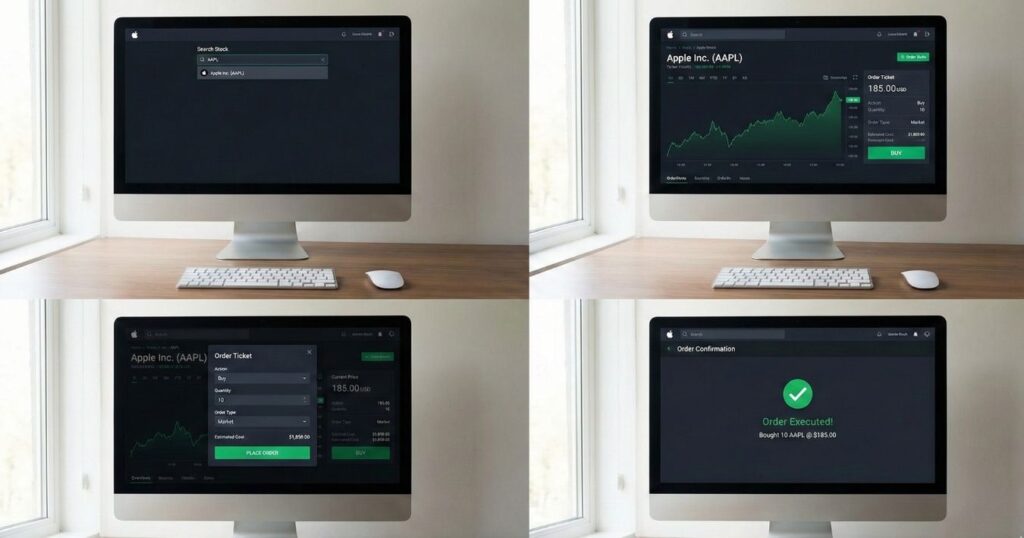
Once you have chosen your platform and opened your account, buying shares follows a straightforward process:
Step 1: Open and verify your account.
Sign up with your chosen platform and complete identity verification. You will need your National Insurance number, a valid ID (passport or driving licence), and proof of address. Most platforms verify accounts within minutes using digital checks.
Step 2: Choose your account type.
Select a Stocks and Shares ISA for tax-free investing (recommended for most people) or a General Investment Account if you have already used your ISA allowance.
Step 3: Deposit funds.
Transfer money from your bank account via bank transfer or debit card. Bank transfers are typically free and arrive within minutes to a few hours.
Step 4: Search for the share you want to buy.
Use the platform’s search function to find the company. You can search by company name or ticker symbol (for example, “Lloyds Banking Group” or “LLOY”).
Step 5: Choose your order type.
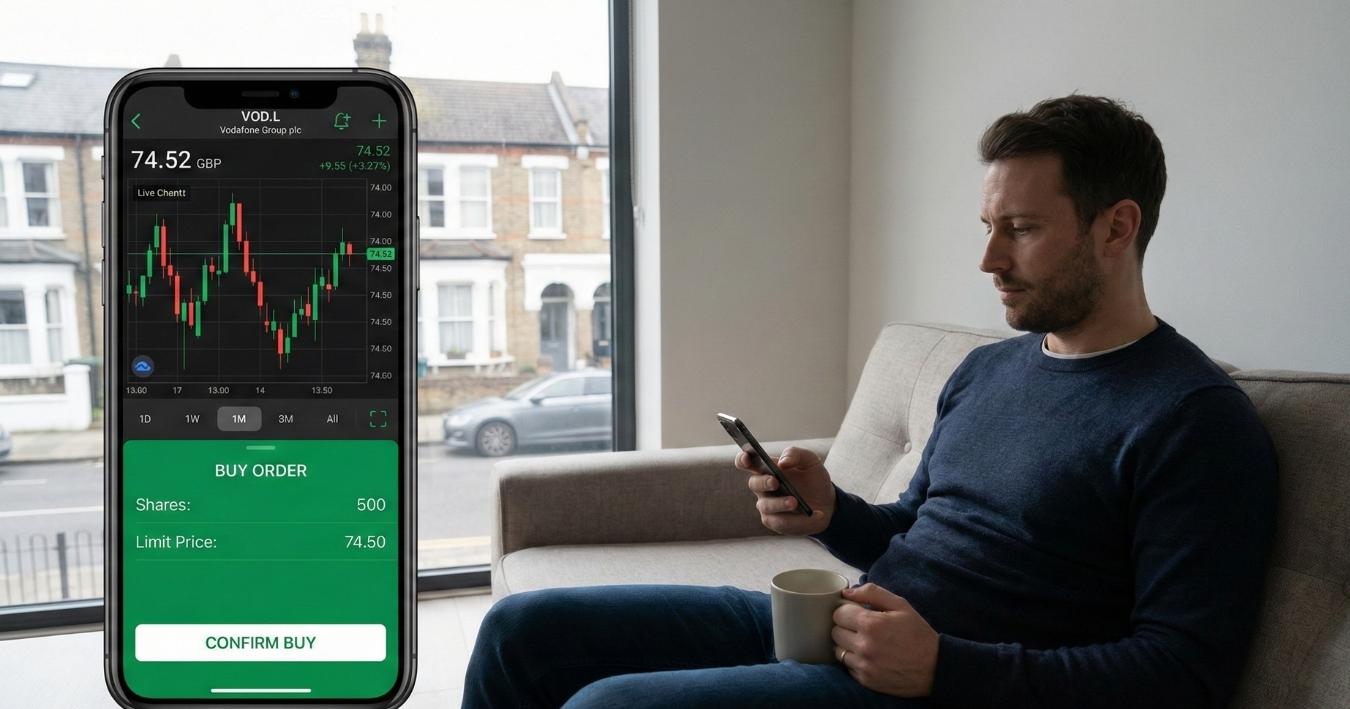
A market order buys immediately at the current best available price. A limit order sets a maximum price you are willing to pay and only executes if the share price reaches that level or below.
Step 6: Enter the amount.
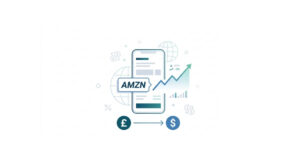
Decide how many shares to buy or, if your platform supports fractional shares, enter a pound amount. For example, on Trading 212 you can invest £50 in Amazon shares without needing to buy a full share.
Step 7: Review and confirm.
Check all the details including the share price, any fees (such as stamp duty), and the total cost. Confirm the order.
Step 8: Monitor your investment.
Once purchased, your shares appear in your portfolio. Remember that share prices fluctuate daily, and short-term drops are normal. Successful investing typically requires patience and a long-term perspective.
- The entire process from opening an account to buying your first share can take as little as 15 minutes on most platforms.
- A market order buys at the current price immediately, while a limit order lets you set a maximum price.
- Fractional shares let you invest any amount from £1, removing the barrier of high share prices.
- Always use a Stocks and Shares ISA as your first account to protect gains from tax.
What Does It Cost to Buy Shares in the UK?
The total cost of buying shares involves several potential charges that you should understand before investing.
Dealing fees
are the most visible cost. These range from £0 on commission-free platforms like Trading 212 and Freetrade to £11.95 per trade on Hargreaves Lansdown. If you plan to make regular purchases, dealing fees can add up significantly over time.
Stamp Duty Reserve Tax (SDRT)
is a government tax of 0.5% charged on purchases of most UK-listed shares, according to HMRC. This is automatically deducted by your platform and added to your transaction cost. For example, buying £1,000 of shares would incur £5 in SDRT. Shares listed on AIM are exempt from stamp duty since 2014, which is one reason AIM shares are popular with some investors.
Foreign exchange fees
apply when buying shares listed in a foreign currency, such as US stocks traded in dollars. Most platforms charge between 0.15% and 1.5% on the currency conversion. Trading 212 charges 0.15%, while Hargreaves Lansdown charges up to 1%.
Platform fees
are an annual charge levied by some platforms. These are typically percentage-based (such as 0.25% at AJ Bell or 0.45% at Hargreaves Lansdown) or flat-fee (such as £5.99 per month at Interactive Investor). Commission-free platforms like Trading 212 and InvestEngine charge no platform fee.
Settlement
is the process by which ownership of shares officially transfers. UK shares currently settle on a T+2 basis, meaning two business days after the trade date. The UK government has confirmed that this will move to T+1 settlement (one business day) from 11 October 2027, aligning with the US market which adopted T+1 in May 2024.
Should You Buy Individual Shares or Funds?
One of the most important decisions for new investors is whether to buy individual company shares or invest through funds and ETFs. Both approaches have distinct advantages.
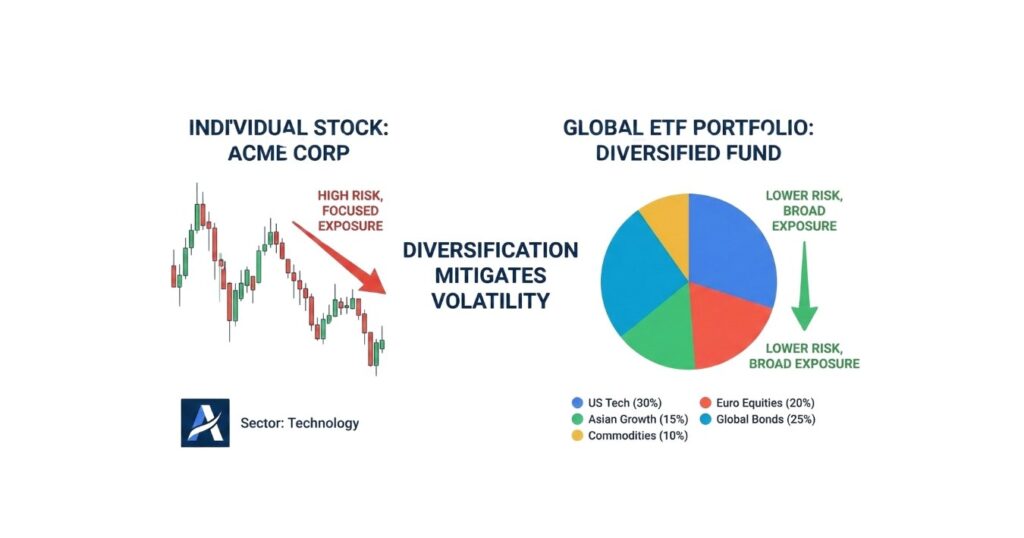
Individual shares give you direct ownership of specific companies and full control over what you hold. You can target companies you believe in and potentially earn higher returns if your picks perform well. However, individual share picking requires significant research, carries concentrated risk, and research from S&P Global (2024) shows that over 90% of professional fund managers fail to beat their benchmark index over 15 years, which suggests stock picking is difficult even for experts.
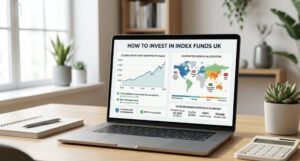
Funds and ETFs bundle hundreds or thousands of companies into a single investment, providing instant diversification. A global index fund like the Vanguard FTSE Global All Cap holds over 7,000 companies across 49 countries. ETFs trade on the stock exchange just like shares, so you buy and sell them using the same process described above.
For most beginners, a combination works well: use a low-cost global index fund or ETF as your core holding (80–90% of your portfolio), and allocate a smaller portion (10–20%) to individual shares you want to research and hold.
For a broader introduction to building a portfolio, see our guide on how to start investing in the U.
- Individual shares offer higher potential returns but carry concentrated risk and require active research.
- Funds and ETFs provide instant diversification across hundreds or thousands of companies in a single purchase.
- Over 90% of professional fund managers underperform their benchmark over 15 years (S&P Global, 2024).
- A core-satellite approach (80–90% index funds, 10–20% individual shares) balances diversification with stock-picking opportunity.
What Are the Tax Implications of Buying Shares in the UK?
Understanding the tax treatment of shares is essential for maximising your returns. The taxes that may apply depend on which account you use and how much you earn from your investments.
Within a Stocks and Shares ISA, there is no tax to pay on any gains, dividends, or interest. This is why an ISA should be your first choice for holding shares.
Outside an ISA (in a GIA), the following taxes may apply:
Capital Gains Tax (CGT) applies when you sell shares at a profit. In 2025/26, CGT rates are 18% for basic rate taxpayers and 24% for higher rate taxpayers on gains above the £3,000 annual exempt amount, according to HMRC. For full details, see our capital gains tax guide.
applies to dividend income above the £1,000 dividend allowance (2025/26). Rates are 8.75% (basic rate), 33.75% (higher rate), and 39.35% (additional rate).
Stamp Duty Reserve Tax of 0.5% applies at the point of purchase regardless of which account you use, as noted above.
What Are the Risks of Buying Shares?
All share investments carry risk, and it is important to understand these before committing money. Share prices can fall as well as rise, and you may get back less than you invested. Individual shares are particularly volatile because your investment depends on the performance of a single company.
Company-specific risks include poor financial results, management changes, regulatory action, or sector downturns. In extreme cases, a company can go into administration and shareholders may lose their entire investment. This is why diversification across multiple companies and sectors is crucial.
Market risk affects all shares. Events like recessions, geopolitical crises, or interest rate changes can cause broad market declines. The FTSE 100 fell approximately 30% during the COVID-19 crash in March 2020 but had recovered within 18 months.
However, time is the most effective risk management tool. According to the Barclays Equity Gilt Study (2024), there has been no 20-year period since 1899 where UK equities failed to outperform cash. The longer you stay invested, the more likely you are to achieve positive returns.
All FCA-regulated platforms provide FSCS protection up to £85,000 per firm if the platform fails. This protects your assets (held in a segregated nominee account) rather than your investment performance.
UK vs International Shares: What Can You Buy?
UK investors have access to a wide range of domestic and international shares through most platforms.
UK shares
include companies listed on the LSE Main Market (FTSE 100, FTSE 250, FTSE All-Share) and AIM. Major UK companies include Shell, AstraZeneca, HSBC, Unilever, and BP. AIM shares offer exposure to smaller growth companies and are exempt from stamp duty, though they tend to be more volatile.
US shares
are available on most UK platforms and include companies listed on the NYSE and NASDAQ, such as Apple, Microsoft, Amazon, Tesla, and Nvidia. US shares are denominated in dollars, so your platform will convert from GBP at the prevailing exchange rate. A W-8BEN form is required to reduce US dividend withholding tax from 30% to 15% under the UK-US tax treaty. Most platforms handle this automatically during the account setup process.
Fractional shares
have transformed accessibility. Previously, if a single Amazon share cost £180, you needed that full amount. Now, platforms like Trading 212 and Freetrade let you buy a fraction of a share for as little as £1 or £2, giving UK investors easy access to high-priced international stocks.
Frequently Asked Questions
You can buy shares from as little as £1 on platforms that offer fractional shares. Traditional platforms require you to buy whole shares, so the minimum depends on the share price. There is no legal minimum investment amount in the UK.
All FCA-regulated platforms must hold client assets separately from company funds. The FSCS protects up to £85,000 per firm if the platform fails. However, share prices can rise and fall, and investment returns are not guaranteed.
Once your account is funded, buying shares takes seconds. A market order placed during trading hours usually executes instantly. Settlement currently takes two business days (T+2).
You pay 0.5% Stamp Duty Reserve Tax (SDRT) on purchases of most UK-listed shares. If you hold shares in a Stocks and Shares ISA, there is no tax on gains or dividends. Outside an ISA, capital gains tax and dividend tax may apply.
Yes. All major UK investment platforms offer mobile apps for iOS and Android. The process of buying shares on mobile is the same as on desktop.
In the UK, the terms share and stock are used interchangeably when referring to ownership in a company. Technically, shares refer to units in a specific company, while stocks is a broader term for equity ownership.
For most beginners, starting with a low-cost index fund or ETF provides instant diversification across hundreds of companies. Individual shares can complement an index fund core but require more research and carry higher risk.
Your shares are held in a segregated nominee account separate from the platform’s own finances. If the platform fails, your shares can be transferred to another provider. The FSCS protects up to £85,000 per firm.
Selling shares follows the same process as buying but in reverse. Search for the share in your portfolio, select sell, choose the amount, and confirm. Sale proceeds are typically available within two business days (T+2).
If you only hold shares within a Stocks and Shares ISA, you do not need to report anything to HMRC. If you hold shares outside an ISA and exceed the capital gains or dividend allowance, you may need to complete a Self Assessment tax return.
Capital at risk. The value of investments can go down as well as up. You may get back less than you invest. Tax treatment depends on individual circumstances and may change in the future. This article does not constitute personal financial advice.