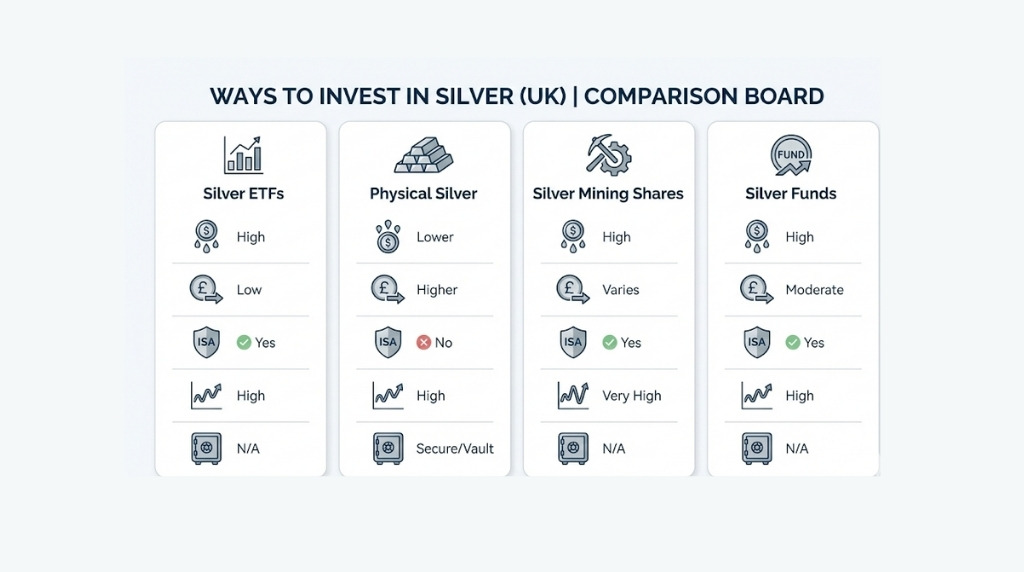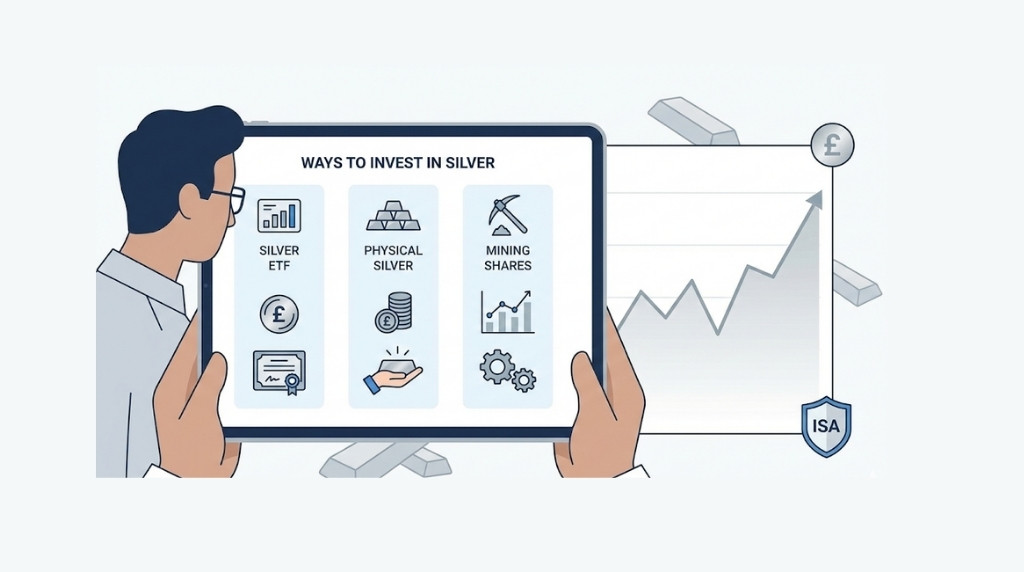
You can invest in silver in the UK through physical bullion, silver ETFs, silver mining shares or silver funds. ETFs like iShares Physical Silver (ISLN) and WisdomTree Physical Silver (PHAG) are the simplest option for most investors. Silver ETFs can be held in a stocks and shares ISA for tax-free gains. Physical silver (coins and bars) attracts 20% VAT on purchase, making ETFs generally more cost-effective.
Silver has been used as money and a store of value for thousands of years. Today, it serves a dual role: it is both a precious metal (like gold) and an industrial commodity used in electronics, solar panels, medical devices and electric vehicles. This industrial demand makes silver's price behaviour different from gold.
For UK investors, silver offers portfolio diversification, a potential hedge against inflation and exposure to growing industrial sectors. However, silver is significantly more volatile than gold and its price can swing sharply. This guide explains every way to invest in silver from the UK, the costs involved and the tax implications.
Warning: Silver is a volatile commodity. Its price can experience dramatic swings over short periods. Silver should form only a small part of a diversified portfolio. This guide is for educational purposes and is not financial advice.
Ways to Invest in Silver in the UK
| Method | Pros | Cons | ISA Eligible? |
| Silver ETFs (e.g. ISLN, PHAG) | Low cost, liquid, no storage, ISA eligible | No physical possession, annual fee | Yes |
| Physical silver (coins/bars) | Tangible asset, no counterparty risk | 20% VAT, storage costs, wider spreads | No |
| Silver mining shares | Leveraged to silver price, dividends possible | Company-specific risk, not pure silver play | Yes |
| Silver funds/trusts | Professional management, diversified miners | Higher fees, may not track silver closely | Yes |
| Silver CFDs/spread bets | Leverage, short selling possible | Very high risk, not suitable for beginners | No (spread bets are tax-free) |
Silver ETFs: The Simplest Way to Invest
Silver ETFs are the most popular way for UK investors to gain exposure to the silver price without buying physical metal. These funds hold physical silver in secure vaults and their price tracks the silver spot price closely.
Best Silver ETFs for UK Investors
| ETF Name | Ticker | Backed By | OCF | Currency |
| iShares Physical Silver ETC | ISLN | Physical silver bars (London vaults) | 0.20% | USD |
| WisdomTree Physical Silver | PHAG | Physical silver bars | 0.49% | USD |
| Invesco Physical Silver ETC | SSLV | Physical silver bars | 0.19% | USD |
All three are listed on the London Stock Exchange and can be purchased through platforms like Trading 212, Hargreaves Lansdown and AJ Bell. They can be held inside a stocks and shares ISA. Note that silver ETCs are priced in USD, so your returns are also affected by the GBP/USD exchange rate.
Key Takeaway: iShares Physical Silver (ISLN) at 0.20% OCF is the cheapest and most liquid silver ETC available to UK investors. Holding it inside an ISA means any gains are completely free from UK tax.
Buying Physical Silver in the UK
You can buy silver coins and bars from bullion dealers such as The Royal Mint, BullionVault, Baird & Co, and Atkinsons Bullion. However, physical silver comes with a major cost disadvantage for UK investors:
VAT: Physical silver purchases in the UK are subject to 20% VAT, unlike gold bullion which is VAT-free. This means you need the silver price to rise by at least 20% just to break even on your purchase. This is the single biggest disadvantage of physical silver over ETFs (Source: HMRC).
Storage: Silver is bulky relative to its value (much more so than gold). Storing large amounts at home creates security risks. Professional vault storage adds ongoing costs.
Spreads: The difference between buying and selling prices (the spread) for physical silver is typically 5% to 15%, much wider than for silver ETFs.
CGT exemption for certain coins: UK legal tender silver coins (such as Britannia coins) are exempt from capital gains tax because they are classified as legal tender. However, they still attract 20% VAT on purchase (Source: HMRC).
Silver Mining Shares
An alternative way to gain silver exposure is through shares in silver mining companies. Mining shares are leveraged to the silver price: if silver rises 10%, a mining company's profit might rise 30% or more (and vice versa for falls).
Major silver miners listed on UK-accessible exchanges include Fresnillo (LSE: FRES), the world's largest primary silver producer, and Pan American Silver (listed on NASDAQ/TSX). You can buy mining shares through any UK broker with access to the relevant exchange.
The downside is that mining shares carry company-specific risks (management, costs, regulations, mine performance) in addition to silver price exposure. They do not track the silver price directly. Consider mining shares as part of a wider investing strategy, not as a pure silver play.
Silver vs Gold: Key Differences
| Factor | Silver | Gold |
| Primary use | ~50% industrial, ~50% investment/jewellery | Primarily investment and jewellery |
| Volatility | Higher (larger price swings) | Lower (more stable) |
| UK VAT on physical | 20% VAT | 0% VAT (investment gold exempt) |
| Price per troy oz (approx.) | £24-£30 | £2,200-£2,500 |
| ISA eligible (via ETF) | Yes | Yes |
| CGT on ETFs | Yes (outside ISA) | Yes (outside ISA) |
| Industrial demand driver | Solar panels, EVs, electronics | Limited industrial use |
| Historical safe haven | Moderate | Strong |
See our full guide: How to Invest in Gold UK.
Tax Rules for Silver Investments in the UK
Silver ETFs in an ISA: All gains are completely tax-free. This is the most tax-efficient way to invest in silver (Source: HMRC, 2025/26).
Silver ETFs outside an ISA: Gains are subject to capital gains tax at 18% (basic rate) or 24% (higher rate) above the £3,000 annual CGT allowance.
Physical silver: 20% VAT on purchase. Capital gains on silver bars are subject to CGT. UK legal tender coins (e.g. Britannia) are CGT-exempt but still attract VAT.
Silver mining shares: Subject to CGT outside an ISA/SIPP. Dividends subject to dividend tax rules.
Frequently Asked Questions
Is silver a good investment in 2026?
Silver has potential as both a precious metal and an industrial commodity, with growing demand from solar energy and electric vehicles. However, it is highly volatile and should form only a small part of a diversified portfolio. Most financial advisers suggest limiting precious metals to 5% to 10% of your total investments.
What is the cheapest way to invest in silver UK?
A silver ETC like iShares Physical Silver (ISLN) at 0.20% OCF, held in a commission-free ISA on a platform like Trading 212, is the cheapest option. Physical silver is significantly more expensive due to 20% VAT and wider dealer spreads.
Do you pay VAT on silver ETFs?
No. Silver ETFs and ETCs do not attract VAT because you are buying a financial security, not physical silver. This is a major cost advantage over buying coins or bars.
Can I hold silver in an ISA?
Yes. Silver ETFs and ETCs can be held in a stocks and shares ISA, making gains tax-free. Physical silver cannot be held in an ISA. Silver mining shares can also be held in an ISA.
Is physical silver worth buying?
For most investors, the 20% VAT on physical silver makes ETFs a better option. Physical silver may appeal to investors who want to hold a tangible asset outside the financial system, but the cost disadvantage is significant.
How much silver should I own?
Most financial advisers suggest precious metals (gold and silver combined) should represent no more than 5% to 10% of your total portfolio. Silver is more volatile than gold, so consider weighting towards gold if you want precious metal exposure with lower risk.
Does silver protect against inflation?
Silver has historically offered some inflation protection, but it is less reliable than gold as an inflation hedge. Silver's industrial demand means its price is also influenced by economic cycles, which can work against it during recessions when inflation is also a concern.
What drives the silver price?
Silver is driven by industrial demand (solar, electronics, EVs), investment demand (safe haven buying), the US dollar, interest rates, mining supply, and speculative trading. Its dual nature as both industrial and precious metal makes it more complex than gold.
Is silver more volatile than gold?
Yes, significantly. Silver typically experiences larger percentage swings than gold in both directions. This higher volatility means both greater potential returns and greater potential losses.
Where do I buy silver ETFs?
Silver ETFs are available on most UK platforms including Trading 212, Hargreaves Lansdown, Interactive Investor, AJ Bell and InvestEngine. Search for the ticker (ISLN, PHAG or SSLV) and buy like any other ETF.
Related Reading
Explore more investing guides on Smart Investor UK:
- How to Invest in Gold UK - Gold investing guide
- Best ETFs UK - Top ETF picks including commodity ETFs
- How to Buy ETFs UK - Step-by-step ETF buying guide
- Best Trading Platforms UK - Compare brokers
- Capital Gains Tax on Shares UK - Tax rules for investors
- Stocks and Shares ISA Explained - Tax-free investing
- Investing Strategies for Beginners - Build your approach
- How to Start Investing UK - Complete beginner's guide
Smart Investor UK is editorially independent. Some links in this article are affiliate links, meaning we may earn a commission if you open an account, at no extra cost to you. This does not affect our editorial independence or the recommendations we make.
Capital at risk. The value of investments can go down as well as up. You may get back less than you invest. Tax treatment depends on individual circumstances and may change. This article does not constitute financial advice. If you are unsure about investing, seek independent financial advice.