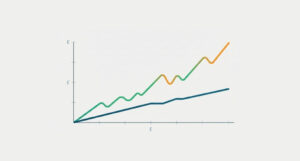
The best investing strategies for beginners in the UK include buy and hold, pound cost averaging, index fund investing and diversification. Vanguard Research (2023) found that lump sum investing outperformed drip-feeding 68% of the time globally, but regular investing is more practical for most people starting out. A simple, diversified portfolio inside a stocks and shares ISA, left untouched for at least five years, is the most reliable path to long-term wealth.
Choosing an investing strategy can feel overwhelming when you are just starting out. There are dozens of approaches, each with passionate advocates, and the financial media is full of conflicting advice.
The good news is that the strategies proven to work for ordinary investors are surprisingly simple. You do not need to study charts, follow market news daily or pick individual stocks to build serious wealth over time. According to the FCA Financial Lives Survey (May 2025), 35% of UK adults now hold investments, yet many lack a clear strategy, which often leads to poor decision-making during volatile markets.
This guide covers seven investing strategies that are accessible to beginners, backed by evidence, and well-suited to UK investors using tax-efficient accounts like ISAs and SIPPs.
Why Do You Need an Investing Strategy?
An investing strategy gives you a framework for making decisions, especially when markets are volatile. Without one, emotions tend to take over. Investors panic and sell when prices fall, then buy back in once prices have recovered, locking in losses and missing gains.
Research from Dalbar's Quantitative Analysis of Investor Behaviour (2024) shows that the average equity fund investor underperformed the S&P 500 by approximately 5.5 percentage points per year over 30 years, largely because of emotional, poorly timed decisions. A clear strategy removes much of this risk.
A strategy also helps you stay consistent. Whether you are investing £50 a month or £1,000, knowing what you are buying and why means you are less likely to abandon your plan when headlines turn negative.
7 Investing Strategies for Beginners
Each of these strategies has a long track record and is suitable for UK investors using standard accounts like a stocks and shares ISA or SIPP.

1. Buy and Hold
Buy and hold is the simplest and most widely recommended strategy for beginners. You purchase a diversified investment, such as a global index fund, and hold it for years or decades regardless of short-term market movements.
The logic is straightforward: stock markets go up more often than they go down. The FTSE All-Share has delivered positive returns in approximately 75% of calendar years since 1986 (Source: FTSE Russell). Over any 10-year period, the probability of a positive return from UK equities rises to over 90%.
Buy and hold works because it avoids the two biggest destroyers of beginner returns: frequent trading (which racks up costs) and panic selling (which locks in losses).
Best for: Investors with a time horizon of 5 years or more who want a hands-off approach.
2. Pound Cost Averaging
Pound cost averaging (PCA) means investing a fixed amount at regular intervals, typically monthly, regardless of what the market is doing. If prices are high, your fixed amount buys fewer units. If prices drop, you buy more. Over time, this smooths out your average purchase price.
For example, investing £200 per month into a FTSE All-Share tracker: in a month when the price is £10 per unit, you buy 20 units. When the price drops to £8, you buy 25 units. Your average cost per unit is lower than if you had invested everything when the price was £10.
Vanguard Research (2023) found that lump sum investing outperformed pound cost averaging 68% of the time globally over one-year periods (MSCI World Index, 1976 to 2022). However, for most beginners who are investing from salary each month rather than deploying a lump sum, PCA is the natural and practical approach. It also removes the emotional barrier of trying to time the market.
Best for: Beginners investing regularly from income. Also useful for anyone nervous about investing a large sum all at once.
3. Index Fund Investing (Passive Investing)
Rather than trying to pick individual stocks or fund managers, index fund investing means buying funds that track a market index. A single global index fund like the Vanguard FTSE Global All Cap (OCF: 0.23%) gives you exposure to over 7,000 companies across developed and emerging markets.
The case for indexing is overwhelming. The S&P SPIVA Scorecard (2024) found that over a 15-year period, 92% of actively managed UK equity funds underperformed their benchmark index. The figures are similar globally. This means the vast majority of professional stock pickers fail to beat the market after fees.
The cost advantage is significant too. Active funds typically charge 0.50% to 1.50% per year. Index funds charge 0.06% to 0.25%. Over 30 years, that fee difference can reduce your final pot by 20% or more.
Best for: Almost everyone. Index funds are the default recommendation from most financial experts for good reason.

4. Diversification
Diversification means spreading your money across different asset classes, geographic regions and sectors so that no single investment can devastate your portfolio.
A well-diversified portfolio might include UK shares, US shares, European and emerging market shares, bonds, and a small allocation to alternatives like gold. If one region or sector underperforms, the others can help cushion the blow.
The simplest way to diversify is through a single global index fund, which automatically holds thousands of companies across dozens of countries. For investors who want more control, combining a global equity fund with a bond fund adjusts the risk level. A common starting point is an 80/20 split (80% equities, 20% bonds) for younger investors, shifting towards more bonds as you approach your goal.
Best for: Everyone. Diversification is a fundamental principle, not an optional extra.
- For most beginners, a combination of buy and hold, pound cost averaging and index fund investing is the most effective approach.
- You do not need to choose just one strategy. They work best together.

5. Dividend Investing
Dividend investing focuses on buying shares in companies that regularly pay dividends (a share of their profits). In the UK, reliable dividend payers include companies in sectors like utilities, banking, oil and consumer goods.
The appeal is twofold: you receive regular income, and reinvesting those dividends compounds your returns significantly over time. According to Barclays Equity Gilt Study (2024), £100 invested in UK equities in 1899 would be worth approximately £200 without reinvesting dividends, but over £35,000 with dividends reinvested. That difference is almost entirely down to compounding.
Beginners can access dividends through dividend-focused ETFs rather than picking individual stocks. The Vanguard FTSE UK Equity Income Index Fund is a popular low-cost option.
Be aware of dividend tax: outside an ISA, dividends above £500 are taxed at 8.75% (basic rate) to 33.75% (higher rate), rising to 10.75% and 35.75% from April 2026 (Source: GOV.UK, Autumn Budget 2025). Holding dividend shares inside an ISA avoids this entirely.
Best for: Investors seeking income or those motivated by seeing regular returns. Particularly effective inside an ISA.

6. Growth Investing
Growth investing targets companies expected to increase their revenues and profits faster than the market average. These tend to be technology, healthcare and innovative businesses. Growth stocks often reinvest profits rather than paying dividends, so your return comes from share price appreciation.
The S&P 500, which is heavily weighted towards US growth companies, has averaged approximately 10.26% per year since 1957 (Source: IG, December 2024). However, growth stocks can be significantly more volatile than the broader market. The Nasdaq 100, a growth-heavy index, fell roughly 33% in 2022 before recovering strongly in 2023 and 2024.
Beginners interested in growth can use ETFs like the iShares S&P 500 Information Technology Sector ETF or the Vanguard S&P 500 ETF rather than picking individual growth stocks. You can learn how to invest in the S&P 500 from our dedicated guide.
Best for: Investors with a long time horizon (10+ years) who are comfortable with higher short-term volatility.
7. Value Investing
Value investing involves identifying shares trading below their intrinsic worth. The idea, popularised by Benjamin Graham and Warren Buffett, is that the market sometimes undervalues good companies, creating opportunities for patient investors.
In practice, value investors look for companies with low price-to-earnings ratios, strong balance sheets and consistent cash flows. Academic research, including work by Fama and French, has shown that value stocks have historically outperformed growth stocks over very long periods, although this advantage has narrowed in recent decades.
For beginners, value investing through individual stock picking is risky and time-consuming. A simpler approach is to use a value-focused ETF, such as the iShares Edge MSCI World Value Factor ETF (OCF: 0.30%), which applies value criteria systematically across global markets.Best for: More experienced beginners willing to research companies. ETF-based value strategies make it more accessible.
- Dividend, growth and value investing add nuance to a portfolio, but for most beginners, a simple global index fund already captures elements of all three.
- Start simple and add complexity only when you are comfortable.
How to Choose the Right Strategy for You
The right strategy depends on your personal circumstances. Consider these four factors:
Time Horizon
The longer you can leave your money invested, the more risk you can afford to take. A 25-year-old saving for retirement can lean heavily towards equities and growth. Someone five years from their goal should prioritise stability.
Risk Tolerance
If a 20% drop in your portfolio would cause you to sell, you need a more conservative approach. Adding bonds or using a ready-made portfolio matched to your risk level can help you stay invested through downturns.
Available Capital
If you are investing from monthly income, pound cost averaging into an index fund is the natural choice. If you have a lump sum, research from Vanguard (2023) suggests investing it immediately tends to produce better results two-thirds of the time, though spreading it over 3 to 6 months is reasonable if it helps you sleep at night.
Knowledge and Interest
If you enjoy researching companies and markets, dividend or value investing might appeal. If you would rather set it up and forget it, a global index fund with automatic monthly contributions is the simplest path.
Investing strategies by difficulty and timeframe
| Strategy | Difficulty | Time Needed | Best Account | Minimum Suggested Horizon |
|---|---|---|---|---|
| Buy and Hold | Very easy | Minutes per year | ISA / SIPP | 5+ years |
| Pound Cost Averaging | Very easy | Set up once | ISA / SIPP | 5+ years |
| Index Fund Investing | Easy | Minutes per year | ISA / SIPP | 5+ years |
| Diversification | Easy | Annual rebalance | ISA / SIPP | 5+ years |
| Dividend Investing | Moderate | Quarterly review | ISA (tax-free) | 5+ years |
| Growth Investing | Moderate | Monthly review | ISA / SIPP | 10+ years |
| Value Investing | Hard | Regular research | ISA / GIA | 10+ years |
How to Start Implementing Your Strategy
Regardless of which strategy you choose, the practical steps are the same.
Step 1: Open a Tax-Efficient Account
A stocks and shares ISA should be your first choice. You can invest up to £20,000 per tax year completely tax free (Source: HMRC, 2025/26). If you are investing for retirement, a SIPP offers additional tax relief. Our SIPP vs ISA guide compares the two.
Step 2: Choose a Low-Cost Platform
Trading 212 (commission-free, fractional shares from £1), Vanguard (0.15% fee capped at £375/year) and InvestEngine (0% platform fee for DIY ETFs) are all excellent for beginners. See our full best trading platforms UK comparison.
Step 3: Pick Your Investments
For a simple, diversified portfolio, consider one of these popular low-cost funds:
- Vanguard FTSE Global All Cap Index Fund (OCF: 0.23%) - over 7,000 companies worldwide
- HSBC FTSE All-World Index Fund (OCF: 0.13%) - broad global exposure
- iShares Core MSCI World ETF (OCF: 0.20%) - developed markets focus
- Vanguard LifeStrategy 80% Equity (OCF: 0.22%) - built-in bond allocation for lower risk
Step 4: Set Up Regular Contributions
Automate your investing with a monthly direct debit. Even £25 to £100 per month builds a meaningful portfolio over time. Use an investment calculator to see how your contributions could grow.
Step 5: Review Annually, Not Daily
Check your portfolio once or twice a year. Rebalance if your asset allocation has drifted significantly from your target. Resist the temptation to check daily or react to short-term market news.
Common Mistakes Beginners Make with Investing Strategies
Switching strategies too often. Jumping from buy and hold to day trading to dividend investing every few months means you never give any approach time to work. Choose a strategy and commit to it for at least three to five years.
Trying to time the market. Even professional fund managers get this wrong more often than right. Research from Charles Schwab found that even investing at the worst possible time each year still produced strong long-term returns, as long as the investor stayed invested.
Ignoring fees. A 1% annual fee difference might not sound significant, but over 30 years on a £200/month investment, it can cost over £30,000 in lost returns (Source: FCA, 2025).
Overcomplicating things. You do not need 15 different funds or a complex asset allocation model. A single global index fund inside an ISA, with regular monthly contributions, is a strategy that outperforms the vast majority of professional fund managers over the long term.
Not investing at all. The FCA estimates 7 million UK adults with £10,000+ in cash savings could benefit from investing but do not (FCA, December 2025). Every year you wait is a year of potential compounding lost.
Warning: Past performance is not a guarantee of future returns. The value of your investments can go down as well as up. All strategies carry risk, and there is no guaranteed way to make money in the stock market. Never invest money you cannot afford to lose or may need within five years.
Frequently Asked Questions
For most UK beginners, a combination of buy and hold and pound cost averaging using a low-cost global index fund inside a Stocks and Shares ISA is the most effective approach. It is simple, low-cost and has a strong historical track record.
Not always. Vanguard Research (2023) found that lump sum investing outperformed pound cost averaging 68% of the time globally. However, for investors who receive income monthly and do not have a lump sum, regular investing is the practical and effective choice. It also reduces the emotional stress of investing a large amount at once.
There is no minimum required. Many platforms like Trading 212 allow investments from £1. Even £25 to £100 per month can grow into a meaningful sum over 10 to 20 years. The most important thing is consistency, not the amount.
Diversification across global index funds is considered one of the lowest-risk equity strategies. Adding bonds further reduces volatility. Vanguard LifeStrategy funds offer pre-built portfolios ranging from 20% to 100% equity to match your risk tolerance. No equity investment is completely risk-free.
Most experts recommend starting with diversified funds rather than individual shares. The S&P SPIVA Scorecard shows that even professional stock pickers underperform index funds over 15 years in 92% of cases. If you do want to buy individual shares, limit them to a small portion (10% to 20%) of your portfolio.
Active investing means a fund manager picks investments trying to beat the market. Passive investing (index fund investing) simply tracks a market index. Passive funds are cheaper (0.06% to 0.25% vs 0.50% to 1.50%) and outperform most active funds over the long term.
At least five years, and ideally much longer. Over any 10-year period, UK equities have delivered positive returns more than 90% of the time (Source: Barclays Equity Gilt Study). The longer you stay invested, the more likely you are to see positive returns.
If you hold a single global index fund, rebalancing happens automatically within the fund. If you hold multiple funds (for example, a separate equity and bond fund), checking once a year and adjusting back to your target allocation is sufficient.
Yes, and most successful investors do. Buy and hold, pound cost averaging, index fund investing and diversification work naturally together. You might add a small dividend or growth tilt as you gain confidence.
A Stocks and Shares ISA is the best starting point for most UK investors. You invest up to £20,000 per year completely tax free. If you are investing for retirement, consider a SIPP for additional tax relief. Only use a General Investment Account once your ISA allowance is used.
Related Reading
Explore more investing guides on Smart Investor UK:
- How to Start Investing in the UK - Complete beginner's guide
- How to Invest Money UK - Step-by-step guide to getting started
- How to Invest in Index Funds UK - The case for passive investing
- Best Stocks and Shares ISA - Compare tax-free ISA platforms
- How to Invest in Gold UK - Diversify with precious metals
- Investment Calculator - Model your portfolio growth
- Capital Gains Tax on Shares UK - Tax rules for investors
- Is Investing Worth It? - The evidence behind long-term investing
Smart Investor UK is editorially independent. Some links in this article are affiliate links, meaning we may earn a commission if you open an account, at no extra cost to you. This does not affect our editorial independence or the recommendations we make.
Capital at risk. The value of investments can go down as well as up. You may get back less than you invest. Tax treatment depends on individual circumstances and may change. Past performance is not a guide to future performance. If you are unsure about investing, seek independent financial advice.