
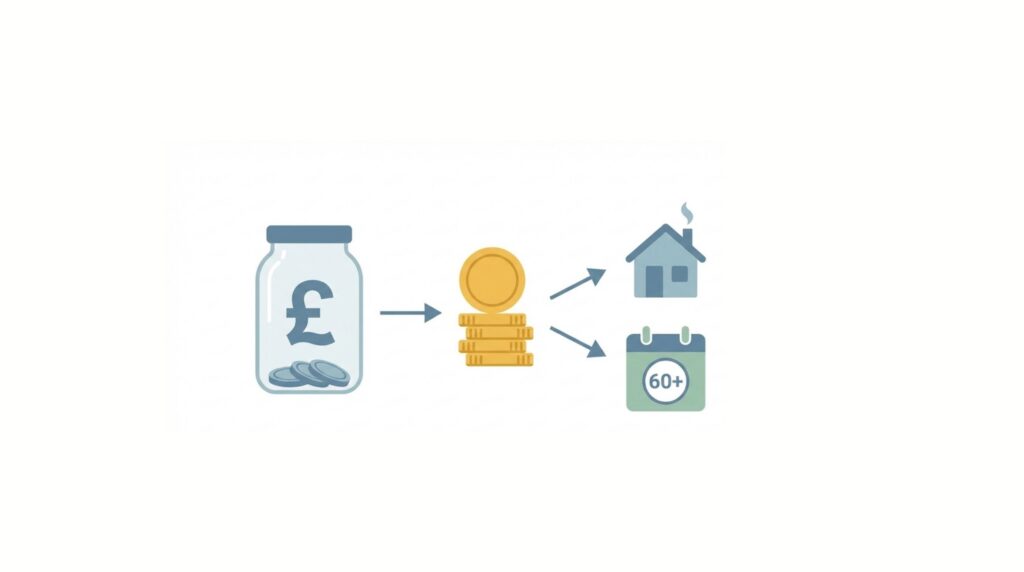
A Lifetime ISA lets UK residents aged 18 to 39 save up to £4,000 per year towards a first home or retirement, with a 25% government bonus worth up to £1,000 annually. You can withdraw penalty-free to buy a first property costing £450,000 or less, or after you turn 60. Withdrawing for any other reason triggers a 25% charge that costs you the bonus plus around 6.25% of your own money. LISA contributions count towards your overall £20,000 ISA allowance. The government announced in the Autumn Budget 2025 that the LISA will be replaced by a new first-time buyer ISA, expected from April 2028, though existing holders can keep contributing indefinitely.
The Lifetime ISA has been one of the most generous savings tools available to younger UK adults since it launched in April 2017, but it also comes with some of the strictest rules in the ISA family. Get them wrong and you could lose a significant chunk of your own money. According to HMRC Annual Savings Statistics (September 2025), LISA contributions climbed to a record £2.3 billion in 2023/24, up 25.3% on the previous year, yet over £100 million was lost to withdrawal penalties in the same period.
With the government now planning to replace the Lifetime ISA entirely, understanding the current rules has never been more important. Whether you are considering opening one, already hold one, or are trying to decide how the upcoming changes affect your plans, this guide covers everything you need to know.
What Is a Lifetime ISA?
A Lifetime ISA is a tax-free savings account designed to help you save for your first home or for retirement. Like other ISAs, any interest earned or investment growth inside a LISA is completely free from income tax and capital gains tax. The defining feature is the 25% government bonus: for every £4 you contribute, the government adds £1, up to a maximum bonus of £1,000 per tax year.
You can open either a Cash Lifetime ISA, which works like a standard savings account with a set interest rate, or a Stocks and Shares Lifetime ISA, where your money is invested in funds or individual shares. Some providers, such as AJ Bell Dodl, offer a hybrid approach where uninvested cash earns interest while you have the option to invest when ready.
According to the HMRC LISA Statistics (September 2025), around 87,250 account holders withdrew from their LISA to purchase a first home in 2024/25, up from approximately 56,750 the previous year. That is a 54% increase, suggesting the product is gaining traction as a genuine route onto the property ladder. The average withdrawal value for a house purchase was £15,782.
- A Lifetime ISA gives you a free 25% government bonus on savings up to £4,000 per year, worth up to £1,000 annually.
- You can hold a Cash LISA (fixed interest) or a Stocks and Shares LISA (invested in funds or shares).
- 87,250 first-time buyers used their LISA to purchase a home in 2024/25, with an average withdrawal of £15,782.
Who Can Open a Lifetime ISA?
The eligibility rules for opening a Lifetime ISA are straightforward but strict. You must meet all of the following criteria:
- Age: You must be aged 18 or over but under 40 when you open the account and make your first payment. Once the account is open, you can continue contributing until your 50th birthday.
- Residency: You must be a UK resident for tax purposes, or a Crown Servant (such as a diplomat or member of the armed forces) or the spouse or civil partner of a Crown Servant.
- National Insurance number: You will need to provide your National Insurance number when opening the account.
If you turn 40 without having opened a LISA, you cannot open one at all. This makes it worth opening an account with even £1 while you are still under 40 to start the clock ticking, particularly because your LISA must have been open for at least 12 months before you can use it towards a property purchase.
Once your account is open, you can contribute each tax year until your 50th birthday. After that, no further contributions are allowed, though your savings will continue to earn interest or investment returns. If you maximise your contributions every year from age 18 to 49, you could receive up to £32,000 in government bonuses alone.
How Much Can You Pay Into a Lifetime ISA?
The annual contribution limit for a Lifetime ISA is £4,000 per tax year (6 April to 5 April). This is separate from the limits on other ISA types, but it counts towards your overall £20,000 annual ISA allowance. If you pay the full £4,000 into your LISA, you have £16,000 remaining to split across Cash ISAs, Stocks and Shares ISAs, or Innovative Finance ISAs.

Table 1: Lifetime ISA Contribution Rules (2025/26)
Lifetime ISA rules
| Rule | Detail |
|---|---|
| Annual LISA limit | £4,000 per tax year |
| Government bonus | 25% of contributions (max £1,000/year) |
| Overall ISA allowance | £20,000 (LISA contributions count towards this) |
| Contribution period | Age 18 to 49 (account must be opened before 40) |
| Bonus payment timing | Paid monthly into your LISA (within 6 to 9 weeks) |
| LISAs per tax year | You can only pay into one LISA per tax year |
| Transfers from other ISAs | Up to £4,000 per year (counts towards LISA limit) |
| Maximum lifetime bonus | £32,000 (if maxed from age 18 to 49) |
Unlike other ISA types, where you can now open and pay into multiple accounts of the same type per tax year following the April 2024 rule change, you can still only pay into one Lifetime ISA per tax year. You can hold more than one LISA in total, but contributions in any given year must go into a single account.
The government bonus is paid directly into your LISA account monthly, typically within six to nine weeks of each contribution. This means your bonus begins earning interest or investment returns straight away, an advantage over the old Help to Buy ISA where the bonus was only applied at the point of purchase.
- The LISA limit is £4,000 per year, counting towards your overall £20,000 ISA allowance.
- The 25% bonus is paid monthly into your account, not at the point of purchase.
- You can only pay into one LISA per tax year, even though other ISA types now allow multiple subscriptions.
Using Your Lifetime ISA to Buy a First Home
Using your LISA towards a property purchase is the primary reason most people open one. However, the withdrawal rules for house purchases are specific and you must meet every condition to avoid the penalty charge.
Property Purchase Conditions
- First-time buyer: You must never have owned a property anywhere in the world, including inherited property or a share in a property.
- Property price cap: The property must cost £450,000 or less. This limit has not changed since the LISA launched in 2017, despite average UK house prices rising 34% over the same period according to the UK House Price Index.
- Mortgage required: You must be buying with a residential mortgage (not a buy-to-let mortgage and not a cash purchase).
- UK property only: The property must be in the United Kingdom.
- 12-month rule: Your LISA must have been open for at least 12 full months before you can make a penalty-free withdrawal for a property purchase.
- Conveyancer required: You must use a solicitor or licensed conveyancer to handle the purchase. Your LISA provider pays the funds directly to them.
- 90-day completion: The purchase is expected to complete within 90 days of withdrawing funds from your LISA.
If you are buying with a partner, you can both use your individual LISAs towards the same property, as long as you are both first-time buyers. The £450,000 price cap still applies to the property itself, regardless of how many LISAs are used.
| Warning: The £450,000 Cap Is Frozen The property price cap has not increased since April 2017 when the average UK house price was £220,094. As of late 2025, the average has risen to £271,188, and to £553,258 in London. AJ Bell calculated that an index-linked cap would now be approximately £575,550. The Treasury Committee and Martin Lewis have both called for reform, and the government has indicated it will look at this as part of the upcoming consultation. |
The 25% Withdrawal Penalty Explained
If you withdraw money from your LISA for any reason other than buying a qualifying first home or after turning 60, you will pay a 25% withdrawal charge on the total amount withdrawn. This is where many savers get caught out, because the maths means you lose more than just the government bonus.
How the Penalty Actually Works
The 25% charge is applied to the total withdrawal amount, which includes your own savings, the government bonus, and any interest or growth. Here is an example:
Table 2: LISA Withdrawal Penalty Worked Example
Lifetime ISA withdrawal charge example
| Step | Amount |
|---|---|
| Your contributions | £4,000 |
| Government bonus (25%) | £1,000 |
| Total in LISA (ignoring growth) | £5,000 |
| 25% withdrawal charge (25% of £5,000) | -£1,250 |
| Amount you receive | £3,750 |
| Net loss of your own money | -£250 (6.25%) |
In this example, you contributed £4,000 of your own money but only received £3,750 back. The 25% charge took back the entire £1,000 bonus plus £250 of your own savings, an effective penalty of 6.25% on your original contributions. If your LISA had also earned interest or investment growth, the percentage loss would be slightly different, but the principle remains the same.
According to HMRC Annual Savings Statistics (September 2025), over £100 million was lost to LISA withdrawal penalties in 2023/24 alone. Research published by HMRC in September 2025 also found that 22% of eligible non-holders said the withdrawal charge was a specific reason they chose not to open a LISA.
The penalty was temporarily reduced to 20% during the coronavirus pandemic (March 2020 to April 2021), which would have only clawed back the government bonus without touching your own money. The rate has since been reinstated at 25%.
- The 25% withdrawal charge costs you the entire government bonus plus approximately 6.25% of your own contributions.
- Over £100 million was lost to LISA penalties in 2023/24, with some individual penalties exceeding £11,000.
- The penalty was cut to 20% during COVID but has returned to 25%. Campaigners want a permanent reduction.
Using Your Lifetime ISA for Retirement
The second penalty-free withdrawal route is retirement. From your 60th birthday, you can withdraw any amount from your LISA for any purpose without paying the 25% charge. The money remains completely tax-free, just like withdrawals from other ISAs.
This has made the LISA a popular retirement savings tool, particularly among self-employed workers who do not have access to workplace pensions with employer contributions. According to PensionBee, many self-employed individuals have turned to LISAs as a flexible way to build long-term savings outside the traditional pension system.
However, if you are choosing between a LISA and a pension for retirement savings, there are important differences to consider. A SIPP (Self-Invested Personal Pension) offers tax relief at your marginal rate, meaning higher-rate taxpayers receive 40% tax relief rather than the LISA's flat 25% bonus. On the other hand, you can access LISA funds from age 60 compared to a pension's minimum age of 57 (rising to 58 from 2028), and LISA withdrawals are entirely tax-free whereas 75% of pension withdrawals are taxed as income.
Table 3: Lifetime ISA vs SIPP for Retirement Savings
Lifetime ISA vs SIPP
| Feature | Lifetime ISA | SIPP |
|---|---|---|
| Tax relief/bonus | 25% bonus (flat rate) | 20%/40%/45% tax relief |
| Annual limit | £4,000 | £60,000 (2025/26) |
| Access age | 60 | 57 (58 from 2028) |
| Tax on withdrawal | Tax-free | 25% tax-free, 75% taxed as income |
| Employer contribution | No | Yes (workplace pensions) |
| Early access | 25% penalty | Not permitted before minimum age |
| Inheritance tax | Forms part of estate | Usually outside estate |
For basic-rate taxpayers, the effective benefit is similar: both the LISA bonus and pension tax relief give you 25% extra. For higher-rate taxpayers, a SIPP is generally more tax-efficient. Most financial planners suggest using a LISA alongside rather than instead of a pension if retirement savings are your goal.
Best Lifetime ISA Providers (2026)
The number of LISA providers remains relatively small compared to standard ISAs, but there are solid options for both cash and stocks and shares accounts. Top cash LISA rates in early 2026 sit above 3.50% AER, and several providers offer promotional bonuses for new customers.
Table 4: Top Lifetime ISA Providers (February 2026)
Lifetime ISA providers and fees
| Provider | Type | Rate / Fee | Min. Deposit | App |
|---|---|---|---|---|
| Tembo | Cash | 3.80% AER (variable) | £1 | Yes |
| Moneybox | Cash | 2.80% + 1.70% bonus | £1 | Yes |
| Plum | Cash | 4.00% AER (inc. bonus) | £0.01 | Yes |
| AJ Bell Dodl | S&S / Cash | 0.15% fee, 3.80% on cash | £100 / £25/mo | Yes |
| Hargreaves Lansdown | Stocks & Shares | 0.25% annual fee | £100 / £25/mo | Yes |
| JP Morgan (Nutmeg) | Stocks & Shares | 0.45% to 0.75% fee | £100 | Yes |
Rates correct as at February 2026. Rates are variable and may change. Promotional bonus rates may apply for a limited period.
If you are saving for a property purchase within the next one to three years, a Cash LISA is generally the safer option because your deposit amount is guaranteed. If your timeline is five years or longer, or you are using the LISA for retirement, a Stocks and Shares LISA offers the potential for higher long-term returns, though with the risk of short-term losses.
What Is Changing? The Future of the Lifetime ISA
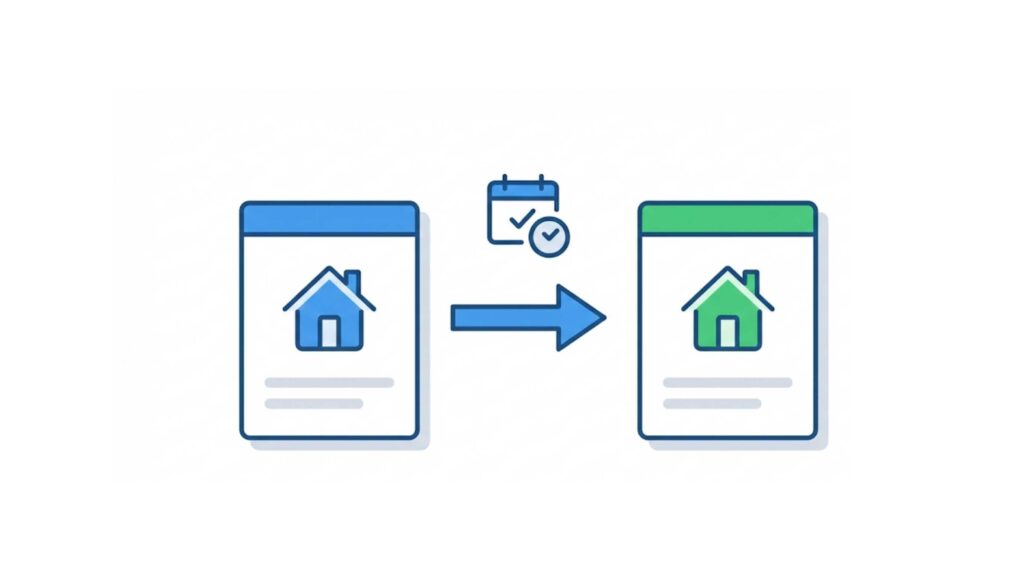
The Autumn Budget 2025, delivered by Chancellor Rachel Reeves on 26 November 2025, confirmed that the government will consult on replacing the Lifetime ISA with a new, simpler first-time buyer savings product. Budget documents stated the consultation would take place in early 2026, with the new product expected to launch from April 2028.
In January 2026, HMRC published further details through its Tax-Free Savings Newsletter 20, confirming several important points:
- Existing LISAs continue: If you already have a LISA or open one before the new product launches, you can keep contributing to it indefinitely. Your account will not be closed.
- New LISAs can still be opened: You can open a new Lifetime ISA right up until the replacement product becomes available.
- Retirement element removed: The new product will focus solely on supporting first-time buyers. The option to use it for retirement savings will not carry over.
- Bonus at purchase, not monthly: Under the proposed replacement, the government bonus would be paid as a lump sum when you buy your property, rather than being credited monthly. This means you would miss out on earning interest or growth on the bonus during the years you save.
- No withdrawal penalty: The new product is expected to remove the withdrawal charge entirely, giving savers flexibility if their plans change.
The Treasury Committee published a report in June 2025 describing the current LISA as "complex" and criticising its dual-purpose design. The committee argued that a single product trying to serve both house purchase and retirement goals results in "poor outcomes for savers" and recommended separate, tailored policies. For existing LISA holders, the immediate advice from most industry experts is to continue as normal. The current rules still apply, the bonus is still being paid monthly, and opening a LISA now means you benefit from years of compounding on the government bonus that future savers under the replacement product may not receive.
- The LISA will be replaced by a first-time buyer ISA expected from April 2028, but existing holders can keep contributing indefinitely.
- The replacement will remove the withdrawal penalty but also drop the retirement savings element and switch the bonus to a lump sum at purchase.
- Opening a LISA now still makes sense for most eligible first-time buyers because you get the monthly bonus and compound growth advantage.
Common Lifetime ISA Mistakes to Avoid
The LISA rules create several traps for the unwary. Here are the most costly mistakes to watch for:
- Buying a property over £450,000: If your dream property costs £451,000, you cannot use your LISA funds penalty-free. You would face the 25% withdrawal charge on the entire pot. This is especially painful in London and the South East, where 28 local authorities outside the capital already have average property prices above the cap.
- Withdrawing before 12 months: Your LISA must be open for at least 12 full months before you can make a qualifying property withdrawal. Open one with £1 now to start the clock, even if you are not planning to buy immediately.
- Forgetting it counts towards your ISA allowance: Paying £4,000 into your LISA and £20,000 into other ISAs would breach your overall £20,000 allowance. HMRC will contact you if you exceed the limit.
- Using it as a cash buyer: You must use a mortgage to buy your property. LISA funds cannot be used if you are paying the full price in cash.
- Assuming the penalty only takes the bonus: The 25% charge is on the total amount withdrawn, not just the bonus portion. You will lose approximately 6.25% of your own money as well.
- Not opening one before turning 40: Once you turn 40, the door closes permanently. Even if you do not plan to save much now, opening an account keeps the option available.
Frequently Asked Questions
Yes. You can hold a LISA alongside any other type of ISA, including a Cash ISA, Stocks and Shares ISA, and Innovative Finance ISA. Your combined contributions across all ISAs cannot exceed £20,000 per tax year, of which a maximum of £4,000 can go into your LISA.
Your money stays in the account and continues to earn interest or investment returns. You can withdraw it penalty-free from age 60. If you withdraw before 60 for a non-qualifying reason, the 25% charge applies.
Yes. LISA transfers between providers must be completed within 30 days. Make sure you transfer rather than withdraw and re-deposit, as a withdrawal would trigger the 25% penalty.
Yes, as long as you personally are a first-time buyer. You can use your LISA towards a joint purchase even if the other buyer is not a first-time buyer. However, the property must still cost £450,000 or less.
No. The property must be in the United Kingdom. Using your LISA for an overseas purchase would require a standard withdrawal, triggering the 25% penalty.
The funds in your LISA form part of your estate and will be distributed according to your will or intestacy rules. There is no withdrawal charge applied in the event of death. However, the funds may be subject to inheritance tax if your estate exceeds the nil-rate band.
It has not been confirmed yet. The Autumn Budget 2025 stated the government would look at the threshold as part of its consultation in 2026. Martin Lewis and several industry bodies have called for the cap to be raised to at least £600,000. If index-linked from 2017, the cap would be approximately £575,550 today.
No. You cannot selectively withdraw the bonus. Any withdrawal triggers the 25% charge on the full amount taken out, whether it is a partial or full withdrawal.
For most eligible first-time buyers, yes. You can still open and contribute to a LISA right now, the monthly bonus will continue to compound, and existing holders can keep their accounts indefinitely even after the replacement launches. The current LISA may actually be more valuable than the replacement product because the bonus is applied monthly rather than at purchase.
Yes. If you are diagnosed with a terminal illness and have less than 12 months to live, you can withdraw from your LISA without paying the 25% charge. You must contact your provider to arrange this.
Related Reading
ISA Allowance 2025/26: How Much Can You Save Tax-Free?
Best Stocks and Shares ISA (2026)
Cash ISA vs Stocks and Shares ISA: Which Is Right for You?
How to Start Investing in the UK
Editorial Disclosure
Smart Investor UK is an independent personal finance resource. This article does not constitute financial advice. The information provided is for educational purposes only and was accurate at the time of writing (February 2026). ISA rules are set by HMRC and may change. Tax treatment depends on individual circumstances. Past performance is not a guide to future returns. The value of investments can fall as well as rise, and you may get back less than you invest. Always consult a qualified financial adviser if you are unsure whether a product is suitable for your circumstances.