
Vanguard Investor is one of the cheapest investment platforms in the UK, charging just 0.15% per year (capped at £375). There are no dealing fees on funds or ETFs, no transfer fees, and no exit fees. The main limitation is that you can only invest in Vanguard's own ~75 funds. You cannot buy individual shares or third-party funds. A £4/month minimum fee (introduced January 2025) makes it less competitive for portfolios under £32,000. For long-term, passive investors who want low-cost index funds and LifeStrategy portfolios, Vanguard remains one of the strongest options in the UK market.
What Is Vanguard Investor?
Vanguard Investor is the UK direct-to-consumer investment platform operated by Vanguard Asset Management. It allows individuals to invest in Vanguard's own range of index funds, ETFs, and actively managed funds through a stocks and shares ISA, SIPP (personal pension), Junior ISA, or general investment account.
Vanguard was founded in 1975 by John C. Bogle, who pioneered the concept of low-cost index investing. The company established its European headquarters in London in 2009 and launched the Vanguard Personal Investor platform in May 2017, bringing its low-cost philosophy directly to UK retail investors. By April 2023, the platform had attracted over 500,000 clients and held more than £16 billion in assets under management (Vanguard UK).
Vanguard's corporate structure is unusual in the investment industry. In the US, Vanguard is owned by its funds, which are in turn owned by their investors. This means the company is effectively client-owned. While the UK arm operates as a subsidiary, this ownership model influences Vanguard's approach to keeping fees as low as possible.
The platform is regulated by the Financial Conduct Authority (FCA) and investments are protected by the Financial Services Compensation Scheme (FSCS) up to £85,000 per person if Vanguard were to fail. Your investments are held in nominee accounts, ring-fenced from Vanguard's own business assets.
Vanguard Investor at a Glance
Platform features and fees
| Feature | Details |
|---|---|
| Platform fee | 0.15% per year (capped at £375) |
| Minimum monthly fee | £4/month for accounts under £32,000 |
| Fund charges (OCF) | 0.06% – 0.79% (average 0.17%) |
| Dealing fees | Free (funds and ETFs) |
| Account types | S&S ISA, SIPP, Junior ISA, GIA, Managed ISA |
| Number of funds | 75 (Vanguard only) |
| Individual shares | Not available |
| Minimum investment | £500 lump sum or £100/month |
| Transfer/withdrawal fees | Free |
| Regulation | FCA regulated, FSCS protected (£85,000) |
| Trustpilot rating | 4.2/5 |
| Mobile app | Yes |
| Customer support | Phone and email (Mon–Fri, 9am–5pm) |

Vanguard Fees and Charges
Vanguard's fee structure is one of the simplest and most competitive in the UK. There are two layers of cost: the platform fee and the fund charges.
Platform Fee
Vanguard charges an annual platform fee of 0.15% on the total value of your investments. This fee is capped at £375 per year, meaning portfolios above £250,000 effectively pay nothing extra on the amount above that threshold.
From 31 January 2025, Vanguard introduced a minimum monthly fee of £4 (£48 per year) for self-managed accounts (ISA, SIPP, and general investment account) with total holdings below £32,000. This was a significant change. Previously there was no minimum, making Vanguard exceptionally cheap for small investors.
The minimum fee does not apply to Junior ISAs or the Vanguard Managed ISA.
Fund Charges (OCF)
On top of the platform fee, each fund has an ongoing charges figure (OCF) that covers fund management costs. Vanguard's OCFs are among the lowest in the industry. In February 2025, Vanguard lowered the average OCF across its range to 0.17%, down from 0.34% twelve years ago.
Typical OCF ranges include passive index funds at 0.06%–0.25%, LifeStrategy funds at 0.20%–0.23%, and actively managed funds at 0.48%–0.79%.
What You Actually Pay: Worked Examples
Total cost by portfolio size
| Portfolio | Platform Fee | Fund OCF (0.17%) | Total Cost | Effective % |
|---|---|---|---|---|
| £5,000 | £48 (min) | £8.50 | £56.50 | 1.13% |
| £15,000 | £48 (min) | £25.50 | £73.50 | 0.49% |
| £32,000 | £48 | £54.40 | £102.40 | 0.32% |
| £50,000 | £75 | £85 | £160 | 0.32% |
| £100,000 | £150 | £170 | £320 | 0.32% |
| £250,000+ | £375 (cap) | £425 | £800 | 0.32% |
For portfolios above £32,000, the effective total cost is around 0.32% per year. This is well below the industry average. For smaller portfolios under £32,000, the £48 minimum fee means you are paying more in percentage terms.
- Vanguard's 0.15% fee (capped at £375) is excellent for medium-to-large portfolios.
- Below £32,000, the £4/month minimum means other platforms like InvestEngine (0% platform fee on DIY accounts) or Trading 212 (0% fees) may be cheaper.
How Vanguard Fees Compare to Competitors
Platform fee comparison
| Platform | Platform Fee | Dealing Fees | Best For |
|---|---|---|---|
| Vanguard | 0.15% (cap £375, min £48) | Free | Passive investors, £32k+ |
| Trading 212 | 0% | Free | Small portfolios, beginners |
| InvestEngine | 0% (DIY) | Free | ETF-only investors |
| AJ Bell | 0.25% | £1.50–£5 | Wider fund choice |
| Hargreaves Lansdown | 0.45% | £0–£11.95 | Full-service, research |
| Interactive Investor | £4.99–£19.99/mo flat | Free regular | Large portfolios |
For a detailed comparison of all major platforms, see our guide to the best trading platforms UK.
What Can You Invest In?
This is Vanguard's biggest limitation. For some investors, this is actually its greatest strength. You can only invest in Vanguard's own funds, of which there are approximately 75. There are no individual company shares, no investment trusts, and no third-party funds from other managers.

Fund Categories Available
Typical OCF by fund category
| Category | Examples | Typical OCF |
|---|---|---|
| Equity index funds | FTSE 100, FTSE All-Share, S&P 500, FTSE Global All Cap | 0.06%–0.23% |
| Bond index funds | UK Gilt, Global Bond, UK Investment Grade | 0.12%–0.15% |
| LifeStrategy funds | 20%, 40%, 60%, 80%, 100% equity blends | 0.20%–0.23% |
| Target Retirement | Auto-adjust as you approach retirement | 0.24% |
| ESG funds | SRI Global Stock, ESG Developed World All Cap | 0.12%–0.20% |
| Actively managed | Active UK Equity, Active Global Equity | 0.48%–0.79% |
LifeStrategy Funds: Vanguard's Flagship Range
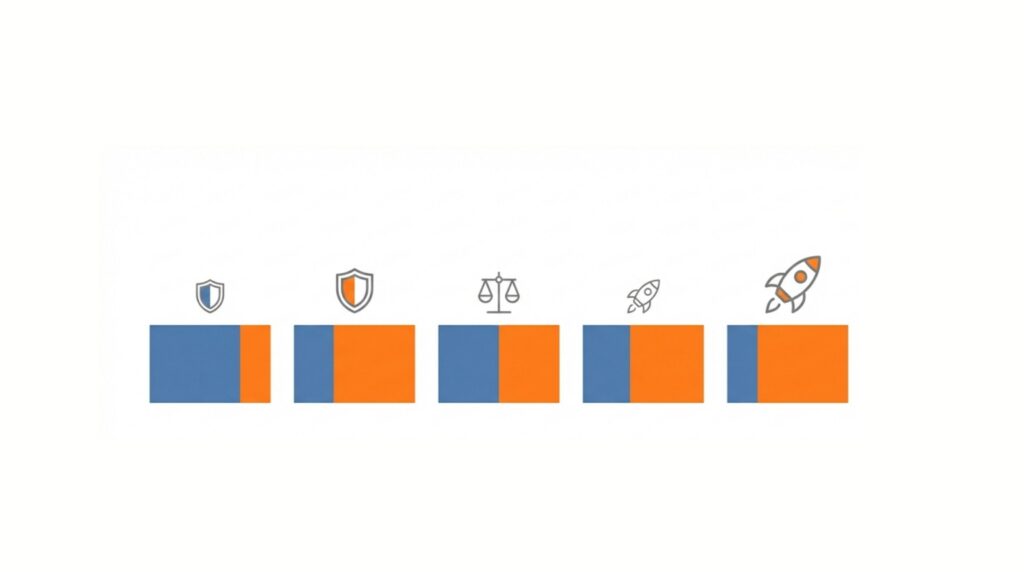
The LifeStrategy range is one of the most popular fund ranges in the UK. Each fund provides a ready-made, globally diversified portfolio with a different equity-to-bond split:
Vanguard LifeStrategy options
| Fund | Equity | Bonds | Risk | Best For |
|---|---|---|---|---|
| LifeStrategy 20% | 20% | 80% | Low (3/10) | Very cautious, short horizons |
| LifeStrategy 40% | 40% | 60% | Low-med (4/10) | Cautious, nearing retirement |
| LifeStrategy 60% | 60% | 40% | Medium (5/10) | Balanced, 10+ year horizon |
| LifeStrategy 80% | 80% | 20% | Med-high (6/10) | Growth, 15+ year horizon |
| LifeStrategy 100% | 100% | 0% | High (7/10) | Max growth, 20+ year horizon |
Each LifeStrategy fund holds between 6,000 and 20,000 individual shares and bonds. They are automatically rebalanced to maintain the target equity/bond split. From March 2026, Vanguard is gradually reducing the UK bias in the standard LifeStrategy range to better reflect the UK's actual share of global markets (Vanguard UK, 2026).
- While Vanguard's range is limited compared to platforms offering thousands of funds and individual shares, the 75 funds cover virtually every major asset class, region, and risk level.
- For passive investors building a diversified portfolio, this is more than sufficient.
Account Types
Vanguard offers five account types covering the main tax wrappers available to UK investors.
Stocks and Shares ISA
Vanguard's stocks and shares ISA allows you to invest up to £20,000 per tax year, with all returns (capital gains and dividends) completely tax-free. You choose from the full range of ~75 Vanguard funds. The ISA is covered by the standard platform fee of 0.15% (capped at £375) with the £4/month minimum.
For more on why ISAs matter, see our guide: stocks and shares ISA explained.
Self-Invested Personal Pension (SIPP)
Vanguard's SIPP gives you a tax-efficient wrapper for retirement savings. You receive tax relief on contributions at your marginal rate (20%, 40%, or 45%), and all growth is tax-free within the pension. Access begins at age 55 (rising to 57 from 2028). Income drawdown is available at no additional cost.
For pension comparisons, see our best SIPP guide.
Junior ISA
The Junior ISA allows parents and guardians to invest up to £9,000 per tax year for a child. The child cannot access the funds until they turn 18. The Junior ISA is exempt from the £4/month minimum fee, making it genuinely low-cost even for small amounts.
General Investment Account (GIA)
A standard taxable investment account with no contribution limits. Returns are subject to capital gains tax and dividend tax at your marginal rate. Best used when you have already used your ISA allowance.
Managed ISA
Launched in December 2022, the Managed ISA matches you with one of five portfolios based on your risk attitude. Vanguard's team manages and rebalances the portfolio for you. The total cost is approximately 0.52% (0.15% platform + 0.20% management + ~0.17% fund charges). This is a good option for investors who want a completely hands-off experience.
Vanguard Pros and Cons
What We Like
Exceptionally low fees. The 0.15% platform fee (capped at £375) is among the lowest in the UK, especially for medium-to-large portfolios. No dealing fees on any fund or ETF purchase means your full investment goes to work immediately.
Simplicity. The limited fund range is actually an advantage for many investors. Instead of being overwhelmed by thousands of options, you choose from ~75 high-quality, well-diversified funds.
LifeStrategy funds. These all-in-one portfolios provide instant global diversification at a very low cost. Ideal for beginners and hands-off investors who want to set up a monthly direct debit and let the fund do the work.
No hidden costs. Zero fees for switching funds, withdrawing money, transferring in or out, and closing accounts.
Strong reputation. Vanguard is one of the world's largest investment managers with nearly 50 years of history. FCA-regulated and FSCS-protected.
What We Don't Like
No individual shares. You cannot buy shares in individual companies (Apple, Tesla, BP) through Vanguard. If you want individual stocks alongside index funds, you need a second platform.
No third-party funds. You are restricted to Vanguard's own funds. Popular funds from other managers such as Fundsmith Equity, Lindsell Train, or Scottish Mortgage are not available.
£4/month minimum hurts small investors. The minimum fee introduced in January 2025 makes Vanguard uncompetitive for portfolios under £15,000–£20,000.
No research tools or market data. Vanguard is built for buy-and-hold investors. No charting tools, stock screeners, or detailed analyst research.
Limited customer support hours. Phone and email only, Monday to Friday, 9am to 5pm. No live chat and no weekend support.
Who Is Vanguard Best For?
Long-term passive investors. If your strategy is to buy index funds, set up a monthly direct debit, and hold for 10–30 years, Vanguard is one of the best platforms available.
ISA investors with £32,000+. At this level and above, Vanguard's ~0.32% total cost (platform + typical fund charges) is hard to beat.
Beginners who want simplicity. The limited fund range and LifeStrategy options remove the complexity of choosing from thousands of investments.
SIPP investors. Vanguard's pension offering is low-cost with free income drawdown, making it competitive with dedicated SIPP providers.
Vanguard is less suitable for active traders, investors who want individual shares, or those with very small portfolios under £15,000.
For alternative platforms suited to different investing styles, see our best trading app UK guide.
Vanguard vs Other UK Platforms
Vanguard vs Trading 212
Trading 212 charges 0% platform fees and offers individual shares alongside ETFs, making it cheaper for small portfolios and more versatile. However, Trading 212 does not offer Vanguard's mutual funds or LifeStrategy range, and its SIPP offering is more limited. For passive fund investors with £32,000+, Vanguard is the better choice. For beginners starting small or wanting individual shares, Trading 212 wins.
See our full comparison: Trading 212 review.
Vanguard vs Hargreaves Lansdown
Hargreaves Lansdown charges 0.45% (three times Vanguard's rate) but offers thousands of funds, individual shares, investment trusts, and extensive research tools. For experienced investors who want the widest possible choice, HL is worth the premium. For cost-conscious passive investors, Vanguard saves hundreds per year.
Vanguard vs Interactive Investor
Interactive Investor charges a flat monthly fee (£4.99–£19.99) regardless of portfolio size, plus access to thousands of funds and individual shares. For very large portfolios (£200,000+), ii becomes cheaper than Vanguard's 0.15%. For portfolios under £100,000, Vanguard is typically cheaper.
How to Open a Vanguard Account
Opening a Vanguard account is straightforward. You need to be a UK resident aged 18 or over (or a parent/guardian for a Junior ISA). You will need your National Insurance number, bank details, and a valid form of identification. The minimum investment is £500 as a lump sum or £100 per month via direct debit.
The process is completed online at vanguardinvestor.co.uk and typically takes around 10 minutes. You select your account type, choose your funds, and set up funding. Regular investments can be automated via standing order or direct debit with no additional charges.
If you are transferring an existing ISA or SIPP from another provider, Vanguard handles the transfer free of charge. An in-specie transfer (moving your existing Vanguard funds without selling) is possible if the outgoing provider supports it, avoiding any time out of the market.
Frequently Asked Questions
Yes, for the right type of investor. Vanguard excels at low-cost, passive investing with strong fund options and simple pricing. It is less suitable for active traders or those wanting individual shares.
£500 as a one-off lump sum or £100 per month via direct debit.
No. Vanguard only offers its own funds and ETFs. For individual shares, you would need a platform such as Trading 212, AJ Bell, or Hargreaves Lansdown.
Vanguard is regulated by the FCA and covered by the FSCS up to £85,000 per person. Your investments are held in nominee accounts, ring-fenced from Vanguard's own assets.
The platform fee is 0.15% per year (capped at £375). There is a minimum of £4/month for accounts under £32,000. Fund charges average 0.17% on top of this.
A range of five ready-made, globally diversified portfolios offering different equity-to-bond mixes (20/40/60/80/100% equity). Each is automatically rebalanced and costs around 0.20%–0.23% per year.
Yes. Vanguard accepts ISA transfers from other providers at no charge. In-specie transfers are possible for Vanguard funds held elsewhere.
Yes, significantly. Vanguard charges 0.15% vs Hargreaves Lansdown's 0.45%, and Vanguard has no dealing fees. On a £50,000 portfolio, Vanguard saves approximately £150+ per year in platform fees alone.
Yes. Vanguard launched its UK mobile app in 2025, allowing you to view your portfolio, make investments, and manage your account on the go.
It depends on your needs. Vanguard is better for passive fund investors with £32,000+ who want LifeStrategy funds and low ongoing costs. Trading 212 is better for beginners with small amounts or those wanting individual shares alongside ETFs.
Our Verdict
Vanguard Investor remains one of the best investment platforms in the UK for passive, long-term investors. The 0.15% fee cap, zero dealing charges, and high-quality fund range make it exceptionally good value, particularly for portfolios above £32,000.
The January 2025 introduction of the £4/month minimum fee was a meaningful change for smaller investors, and anyone with less than about £15,000 invested should consider whether a free platform like InvestEngine or Trading 212 would be more cost-effective while they build up their portfolio.
For the majority of UK investors looking to build wealth steadily through index funds and ISAs, Vanguard delivers exactly what it promises: simple, low-cost investing with a trusted global name behind it.
Smart Investor UK Rating: 4.2 / 5
Related Reading
Best Trading Platforms UK - Compare all major UK investment platforms
Best Stocks and Shares ISA - Find the right ISA for your needs
How to Start Investing UK - A beginner's complete guide
Trading 212 Review - How Vanguard's main rival compares
Disclaimer: This article is for informational and educational purposes only and does not constitute financial advice. The value of your investments can go down as well as up, and you may get back less than you invested. Tax treatment depends on your individual circumstances and may change. Smart Investor UK may receive commission from some of the platforms mentioned in this article.